How to Increase Direct Bookings for Hotels: 15 Tactics That Actually Work in 2026
Increasing direct bookings for hotels requires a strategic approach that combines website optimization, compelling incentives, and targeted marketing campaigns. By implementing proven tactics like exclusive perks for direct bookers, advanced SEO strategies, loyalty programs, and personalized guest experiences, hotels can significantly reduce their dependency on OTA commissions while building stronger guest relationships and improving profit margins.
TL;DR
- Website optimization and booking engine integration are foundational for converting visitors to direct bookers
- Exclusive incentives like room upgrades, late checkout, and direct-only rates motivate guests to bypass OTAs
- Content marketing and SEO strategies drive organic traffic and establish hotel authority in local markets
- Loyalty programs and personalized experiences encourage repeat direct bookings and higher lifetime value
- Strategic OTA management balances visibility with direct booking prioritization
- Advanced tactics including retargeting campaigns and revenue management optimize conversion rates
The shift toward direct bookings has become more critical than ever as OTA commissions continue climbing. Some providers charge 18% commission fees for boutique hotels, while some OTA commissions can range up to 30% per booking. With major booking platforms combined holding 42% market share of the OTA booking space, hotels face intense pressure to differentiate their direct channels.
At inkSTR, we've seen this challenge firsthand working with vacation rental operators and boutique hotels. The strategies that drive direct bookings aren't just about competing on price. They're about creating compelling reasons for guests to choose your direct channel over the convenience of OTAs.
By 2030, Skift forecasts digital direct channels will be the dominant force in hotel bookings. The hotels that start implementing comprehensive direct booking strategies now will capture the largest share of this growing market.
Why Do Hotels Need More Direct Bookings?
Hotels pursuing direct bookings face a fundamental revenue challenge. Every booking processed through an OTA costs significantly more than direct reservations, yet many properties struggle to compete with the marketing reach and convenience of major booking platforms.
The commission structure alone makes direct bookings financially compelling. When a guest books through some providers at 18% commission, a $200 room night generates $164 in revenue. The same booking direct keeps the full $200, representing a 22% revenue increase per room. For a 50-room property averaging 70% occupancy, switching just 30% of bookings from OTAs to direct channels can increase annual revenue by over $95,000.
Beyond commission savings, direct bookings provide valuable guest data that OTAs typically withhold. Hotels with direct booking relationships can implement targeted email marketing, personalized upsells, and loyalty programs that drive repeat visits and higher lifetime value.
We've seen STR operators using inkSTR's content automation tools increase their direct booking percentages by creating consistent, SEO-optimized content that ranks above OTA listings in local searches. The same principles apply to hotels looking to capture organic traffic before potential guests reach comparison sites.
How Can Hotels Optimize Their Booking Website for Direct Reservations?
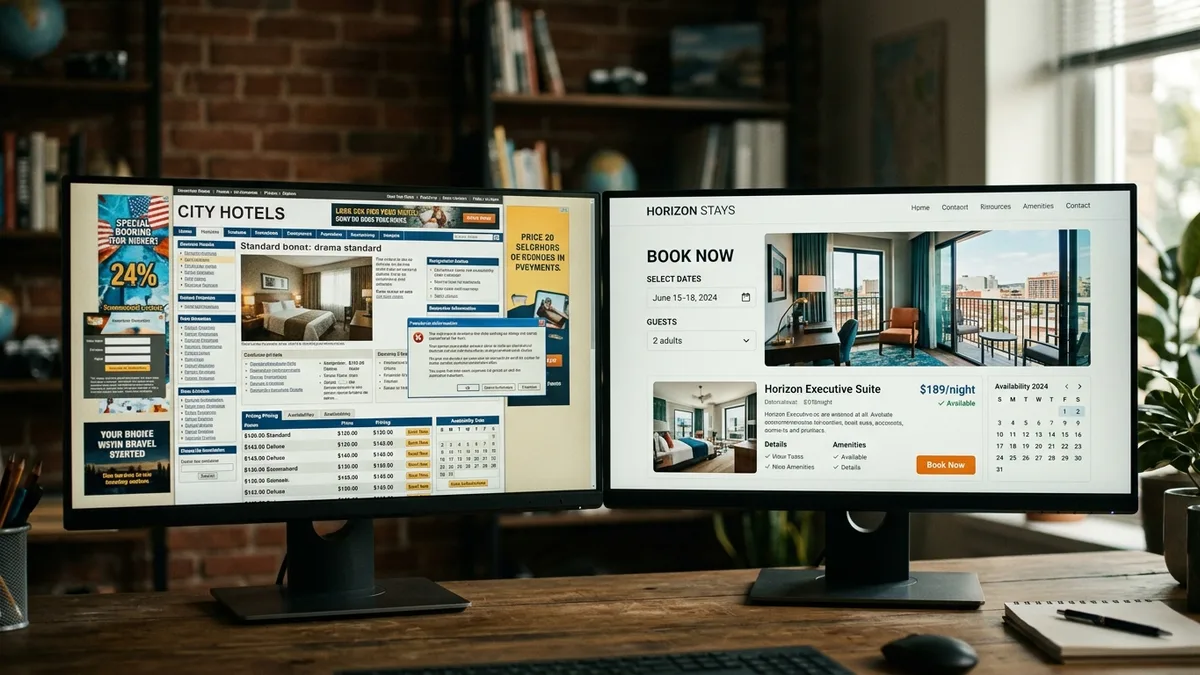
Most hotel websites lose potential direct bookings due to poor user experience and outdated booking engines. A booking website that doesn't convert visitors effectively sends guests straight to OTAs where the booking process feels more reliable and streamlined.
The booking engine represents the most critical conversion point on any hotel website. Modern travelers expect the same seamless booking experience they find on major OTAs, including real-time availability, transparent pricing, and mobile-responsive design. Hotels using outdated booking systems typically see conversion rates below 2%, while optimized sites achieve 4-8% conversion rates.
Website performance directly impacts booking conversions. Sites loading in under 3 seconds convert 32% better than slower sites. Images should be sharp but smaller than 1 MB for optimal loading, and the homepage should feature 4 to 7 main navigation tabs for best user experience.
This technical optimization challenge is where inkSTR's automated content and SEO tools prove valuable for hospitality operators. While we primarily serve vacation rental managers, the same website optimization principles drive direct bookings across all accommodation types.
Essential Booking Engine Features
The booking engine must handle real-time inventory management, dynamic pricing updates, and secure payment processing. Integration with your property management system ensures availability accuracy and prevents overbookings that damage guest trust.
Mobile optimization cannot be optional in 2026. Over 60% of hotel searches now happen on mobile devices, and mobile users convert at higher rates when the booking process is streamlined for small screens.
Include guest reviews prominently on booking pages. Research shows 79% of bookers read between 6 to 12 reviews before making a reservation. Displaying recent positive reviews near the booking button increases conversion rates significantly.
What Exclusive Perks Should Hotels Offer for Direct Bookings?
Generic incentives like "10% off direct bookings" rarely compete effectively with OTA convenience and comparison shopping tools. Hotels need compelling, exclusive perks that OTAs cannot replicate to motivate direct booking behavior.
The most effective direct booking incentives focus on experience enhancement rather than simple discounts. Room upgrades, late checkout until 2 PM, complimentary breakfast, or exclusive access to hotel amenities create perceived value that exceeds the convenience of booking through OTAs.
Rate parity agreements with OTAs prevent hotels from advertising lower rates publicly, but hotels can offer closed user group rates through email marketing and loyalty programs. These targeted offers bypass rate parity restrictions while providing genuine savings to direct bookers.
Our experience with vacation rental content marketing at inkSTR shows that exclusive perks work best when they're prominently featured in SEO-optimized content. Hotels blogging about local events can naturally mention exclusive packages available only through direct booking, capturing both search traffic and conversion intent.
High-Impact Perk Categories
Experiential perks often outperform monetary discounts. Welcome amenities like local artisan chocolates, curated city guides, or partnerships with nearby restaurants create memorable experiences that encourage repeat direct bookings and positive reviews.
Service-based perks leverage hotel staff capabilities that OTAs cannot provide. Guaranteed early check-in, personalized concierge services, or complimentary luggage storage demonstrate the advantage of booking directly with hotel staff who can accommodate special requests.
Exclusive access perks work particularly well for boutique properties. Priority reservations at the hotel restaurant, private pool hours, or members-only events create genuine exclusivity that builds brand loyalty beyond individual stays.
How Should Hotels Use Content Marketing to Drive Direct Bookings?
Most hotel websites publish generic destination guides that compete poorly against established travel blogs and OTA content. Effective hotel content marketing requires strategic focus on local expertise and unique property perspectives that search engines and potential guests cannot find elsewhere.
Hotels with active content marketing programs typically see 67% more organic search traffic than properties relying solely on OTA visibility. This organic traffic converts to direct bookings at much higher rates because visitors arrive through content that establishes the hotel's local authority and expertise.
Content themes should align with your target guest segments and seasonal booking patterns. Business hotels benefit from publishing guides to local corporate dining, efficient airport transportation, and proximity to conference facilities. Resort properties generate more direct bookings with seasonal activity guides, family-friendly local attractions, and wellness-focused content.
This is exactly the challenge that led us to develop inkSTR's automated content generation tools. Hospitality operators need consistent, SEO-optimized content but lack time for regular blog creation. Our platform generates 2,500-word articles optimized for both search engines and AI citations, helping properties compete with OTA content dominance.
Local SEO Content Strategies
Target long-tail keywords that reflect genuine guest search behavior. Instead of competing for "Miami hotels," create content around "business hotels near Miami Airport with meeting rooms" or "pet-friendly Miami Beach hotels with balconies." These specific queries indicate higher booking intent and face less competition.
Seasonal event content drives significant direct booking traffic when properly optimized. Publishing detailed guides to local festivals, conference seasons, or holiday events 2-3 months in advance captures early booking searches when availability and rates are most favorable.
Location-specific landing pages for different guest segments allow hotels to capture diverse search intents. Separate pages optimizing for "romantic weekend getaway," "business travel accommodation," and "family vacation hotel" can all rank for different keyword sets while driving bookings to the same property.

What Role Does Social Media Play in Increasing Direct Bookings?
Social media rarely generates direct bookings immediately, but it plays a crucial role in building brand awareness and trust that influences booking decisions made elsewhere. Hotels using social media effectively create touchpoints that make their property memorable when guests are ready to book.
User-generated content provides authentic social proof that influences booking decisions more than professional marketing photos. Encouraging guests to share their experiences with property-specific hashtags creates a library of authentic content that showcases real guest satisfaction.
Social media retargeting campaigns convert significantly better than general advertising because they reach users who have already expressed interest in your property. Visitors who viewed your booking page but didn't complete a reservation can be retargeted with exclusive offers or compelling content that brings them back to book directly.
We've observed similar patterns working with vacation rental operators through inkSTR. Social content works best when it supports a comprehensive digital marketing strategy that includes SEO-optimized blog content and email marketing automation. Social media amplifies other marketing efforts rather than driving bookings independently.
Platform-Specific Strategies
Instagram Stories and Reels showcase behind-the-scenes hotel experiences that create emotional connections with potential guests. Virtual property tours, staff introductions, and local area highlights humanize the property beyond standard booking site photos.
LinkedIn marketing works particularly well for business hotels targeting corporate travelers and event planners. Publishing thought leadership content about local business trends, conference hosting best practices, and corporate travel tips establishes authority with decision-makers who book multiple rooms or extended stays.
Facebook advertising provides sophisticated targeting options for reaching potential guests based on travel behavior, demographics, and interests. Custom audiences built from website visitors, email subscribers, and past guests can be retargeted with compelling offers to encourage direct bookings.
How Can Hotels Build Effective Loyalty Programs for Repeat Direct Bookings?
Traditional hotel loyalty programs often require numerous stays before guests receive meaningful benefits, making them ineffective for properties that don't generate frequent repeat visits. Modern loyalty programs need to provide immediate value while encouraging direct booking behavior from the first reservation.
Points-based systems work well for chain hotels but create operational complexity for independent properties. Tier-based programs offering escalating benefits after each direct booking provide simpler administration while still encouraging repeat direct reservations over OTA bookings.
Psychological ownership increases guest loyalty more effectively than transactional rewards. Cornell study research shows psychological ownership is correlated to increased brand loyalty. Allowing guests to customize room preferences, select specific rooms, or personalize their stay experience creates stronger emotional connections than discount-focused programs.
At inkSTR, we help vacation rental operators build guest loyalty through personalized email content and property-specific communications. The same personalization principles that drive repeat STR bookings apply to hotel loyalty programs focused on individual guest preferences and stay history.
Program Structure Options
Immediate benefit programs provide value from the first direct booking. Offering guaranteed room upgrades, complimentary Wi-Fi, or welcome amenities exclusively to direct bookers creates instant loyalty program value without complex point accumulation requirements.
Experience-based rewards often generate more loyalty than monetary benefits. Exclusive access to hotel events, priority restaurant reservations, or personalized concierge services create memorable experiences that encourage guests to book directly for future trips.
Referral incentives leverage satisfied guests to generate new direct bookings. Offering existing guests credits, room upgrades, or exclusive experiences for successful referrals creates a self-sustaining direct booking growth system.
Ready to automate your content marketing?
inkSTR handles keyword research, content strategy, article writing, and publishing, all on autopilot.
What Pricing Strategies Help Hotels Compete with OTA Rates?
Rate parity agreements with major OTAs prevent hotels from publicly advertising lower rates, but several pricing strategies can make direct bookings more attractive without violating these contracts. Understanding rate parity limitations allows hotels to implement creative approaches that encourage direct reservations.
Closed user group pricing bypasses rate parity restrictions by offering special rates to defined groups like email subscribers, loyalty members, or past guests. These targeted offers can include genuine discounts or package deals not available through public channels.
Value-added packages create pricing advantages without direct rate competition. Bundling room rates with breakfast, parking, spa credits, or local experience vouchers provides greater perceived value than the base room rate available through OTAs.
Dynamic pricing strategies aligned with demand patterns help hotels optimize revenue while maintaining competitive positioning. Revenue management tools that adjust rates based on demand, seasonality, and local events ensure direct booking rates remain attractive during key booking periods.
Package Development Strategies
Romance packages work particularly well for boutique hotels and resorts targeting couples. Combining room rates with champagne, dinner reservations, or spa services creates packages that OTAs cannot replicate while generating higher per-guest revenue.
Business traveler packages address specific corporate guest needs. Including room rates with airport transportation, meeting room access, or extended checkout creates value propositions that appeal to expense account travelers who often have flexibility in booking channels.
Local experience packages leverage hotel relationships with area attractions, restaurants, and activity providers. These partnerships create exclusive offerings that demonstrate local expertise while generating additional revenue streams beyond room rates.
How Should Hotels Manage Their OTA Relationships While Promoting Direct Bookings?
Completely eliminating OTA presence rarely benefits hotels, as these platforms provide valuable visibility to new guests who might never discover the property otherwise. Effective OTA management balances visibility with strategies that encourage guests to book directly for future stays.
OTA listing optimization should focus on brand building rather than just booking conversion. High-quality photos, compelling property descriptions, and strategic response to reviews create positive impressions that encourage guests to research the hotel's direct channels for future bookings.
Review management across OTA platforms impacts direct booking potential significantly. Professional responses to both positive and negative reviews demonstrate guest service quality and attention to detail that encourages future direct communication with the hotel.
This multi-channel approach mirrors what we see working for vacation rental operators using inkSTR. Properties maintain OTA visibility while using content marketing and SEO to capture guests before they reach comparison sites. The same strategy applies to hotels building direct booking funnels.
Channel Management Best Practices
Inventory allocation strategies can prioritize direct bookings without completely restricting OTA availability. Releasing limited inventory to OTAs while holding premium rooms for direct bookers creates scarcity that encourages direct channel usage.
Response time management across all channels ensures consistent guest service quality. Prompt responses to OTA inquiries and reviews demonstrate professionalism that encourages guests to contact the hotel directly for future reservations or special requests.
Cross-channel messaging opportunities allow hotels to promote direct booking benefits within OTA interactions. Email confirmations, check-in communications, and departure follow-ups can highlight exclusive perks available through direct booking for future stays.
What Advanced Marketing Tactics Drive the Most Direct Bookings?
Beyond foundational strategies, hotels achieving the highest direct booking percentages implement advanced marketing tactics that require more sophisticated execution but generate significantly better results than basic approaches.
Retargeting campaigns convert website visitors who didn't complete initial bookings. Visitors who viewed specific room types or booking pages can be retargeted with personalized offers, exclusive packages, or time-sensitive promotions that encourage them to return and book directly.
Email marketing automation sequences nurture potential guests through the booking decision process. Automated series targeting newsletter subscribers, inquiry responses, and past guest communications keep the hotel top-of-mind during travel planning periods.
Metasearch optimization on platforms like alternative search services can drive traffic cost-free to hotel websites while maintaining direct booking relationships. Unlike traditional OTAs, metasearch platforms allow hotels to direct traffic to their own booking engines.
These advanced tactics require consistent content creation and marketing automation that many hotels struggle to maintain. That's exactly why we built inkSTR's content automation platform to handle SEO content generation, publishing workflows, and performance tracking for hospitality operators who need professional marketing results without dedicated marketing teams.
Technology Integration Opportunities
Chatbot implementation provides 24/7 booking support that can capture direct reservations outside business hours. AI webchat reduces site drop-offs by providing instant responses to common questions about rates, availability, and property amenities.
CRM integration with booking engines allows hotels to track guest preferences, stay history, and communication preferences for personalized marketing campaigns. This guest data creates opportunities for targeted offers that increase direct booking likelihood.
Marketing automation platforms can trigger personalized campaigns based on guest behavior, booking anniversaries, or seasonal travel patterns. These automated touchpoints maintain relationships between stays while promoting direct booking for future trips.
How Can Hotels Measure Direct Booking Success and ROI?
Tracking direct booking performance requires metrics beyond simple booking counts. Hotels need comprehensive measurement systems that evaluate both immediate conversions and long-term guest relationship development to understand the full value of direct booking investments.
Revenue per available room (RevPAR) comparisons between direct and OTA bookings reveal the true financial impact of channel optimization efforts. Direct bookings typically generate 15-30% higher net revenue per room after accounting for commission savings and reduced marketing costs.
Guest lifetime value metrics capture the long-term benefits of direct booking relationships. Guests acquired through direct channels typically book more frequently, spend more per stay, and refer more new guests than those acquired solely through OTAs.
Website analytics integration provides detailed insights into booking funnel performance. Tracking visitor sources, page engagement, and conversion paths identifies which marketing efforts drive the highest-quality direct booking traffic.
Key Performance Indicators
Direct booking percentage should be tracked monthly and compared to industry benchmarks for similar property types. Independent hotels typically achieve 40-60% direct booking rates, while chain properties often reach 60-80% through brand loyalty advantages.
Cost per acquisition measurements help evaluate marketing channel effectiveness. Direct bookings acquired through content marketing typically cost significantly less than paid advertising campaigns while generating higher lifetime value guests.
Guest retention rates indicate the success of loyalty programs and guest experience initiatives. Properties achieving above 25% repeat guest rates typically have strong direct booking programs that encourage ongoing direct relationships.
What Common Mistakes Kill Hotel Direct Booking Efforts?
Many hotels invest significant resources in direct booking initiatives without achieving meaningful results because they make fundamental strategic mistakes that undermine their entire approach.
Competing solely on price against OTAs creates a race to the bottom that erodes profit margins without building sustainable competitive advantages. Guests who choose hotels based purely on rate often lack loyalty and will switch to competitors for minimal savings.
Neglecting mobile optimization costs hotels significant direct bookings as mobile traffic continues growing. Booking engines that don't function seamlessly on smartphones send frustrated users directly to OTA mobile apps where the booking process works reliably.
Inconsistent marketing execution across channels confuses potential guests and weakens brand messaging. Hotels that maintain different visual branding, messaging, or service promises across their website, social media, and email marketing create trust issues that favor familiar OTA platforms.
At inkSTR, we see similar consistency challenges with vacation rental operators who struggle to maintain regular content creation and marketing activities. Automated content generation solves the consistency problem by ensuring properties publish SEO-optimized content regularly without requiring constant manual effort.
Execution Pitfalls
Overcomplicating loyalty programs with complex point systems, tier requirements, or redemption processes creates friction that discourages participation. Simple, immediate benefits typically generate better engagement than elaborate programs guests don't understand.
Ignoring guest review responses across all platforms signals poor customer service that drives future bookings to competitors. Professional, personalized responses to reviews demonstrate guest service quality that encourages direct communication with the hotel.
Failing to track and analyze performance metrics prevents hotels from identifying successful tactics and optimizing underperforming initiatives. Regular performance reviews and strategy adjustments are essential for maintaining competitive direct booking programs.
FAQ
How long does it take to see results from direct booking initiatives?
Most hotels begin seeing measurable improvements in direct booking rates within 3-6 months of implementing comprehensive strategies. Website optimization and booking engine improvements typically show results within 30-60 days, while content marketing and SEO efforts require 3-6 months to generate significant organic traffic. Loyalty programs and repeat guest initiatives show the longest timeline, often requiring 6-12 months to demonstrate full impact.
What percentage of bookings should come directly versus through OTAs?
Independent hotels typically achieve 40-60% direct booking rates, while chain properties often reach 60-80% through brand recognition advantages. The optimal mix depends on property type, location, and target market. Business hotels in corporate markets often achieve higher direct booking percentages than leisure properties in tourist destinations where OTA visibility remains valuable for discovery.
How can small hotels compete with major OTA marketing budgets?
Small hotels compete most effectively by focusing on local expertise, personalized service, and unique property characteristics that OTAs cannot replicate. Content marketing targeting long-tail local keywords, strategic partnerships with area businesses, and exceptional guest experiences that generate positive reviews and referrals provide competitive advantages without requiring massive advertising budgets.
Are rate parity agreements legally required with OTAs?
Rate parity agreements are contractual obligations, not legal requirements. Hotels can negotiate these terms or choose not to participate with OTAs that require restrictive rate parity clauses. However, major OTAs often reduce property visibility for hotels that don't maintain rate parity, creating a business decision rather than legal requirement.
What booking engine features are most important for direct conversions?
Essential booking engine features include real-time availability, mobile responsive design, secure payment processing, and integration with property management systems. Advanced features like room selection, package customization, and guest preference storage improve conversion rates significantly. Fast loading times and intuitive navigation are crucial for preventing booking abandonment.
How should hotels handle negative reviews on OTA platforms?
Professional responses to negative reviews should acknowledge specific concerns, apologize for guest disappointments, and outline steps taken to address issues. Responses should be timely, personalized, and professional rather than defensive. When appropriate, invite the guest to continue the conversation directly with hotel management to demonstrate commitment to service recovery.
What role does content marketing play in direct booking success?
Content marketing drives organic search traffic that converts to direct bookings at higher rates than paid advertising traffic. SEO-optimized content helps hotels rank above OTA listings for local searches while establishing property expertise and authority. Consistent content creation requires significant time investment, which is why many successful hotels use automated content generation tools to maintain publishing schedules.
Building Your Direct Booking Strategy for 2026
Increasing direct bookings requires a comprehensive approach that combines website optimization, compelling guest incentives, strategic content marketing, and consistent execution across all guest touchpoints. Hotels that implement these 15 tactics systematically will reduce OTA dependency while building stronger guest relationships and improving profit margins.
The most successful properties start with foundational website and booking engine optimization, then layer on content marketing, loyalty programs, and advanced marketing tactics based on their specific target markets and operational capabilities. Consistency across all initiatives matters more than perfect execution of individual tactics.
Success in 2026 will favor hotels that automate repetitive marketing tasks while maintaining personalized guest experiences. Properties that can generate consistent, high-quality content while responding personally to guest inquiries and reviews will capture the largest share of growing direct booking demand.

Ready to automate the content creation process that drives direct bookings? At inkSTR, we help hospitality operators generate SEO-optimized blog content that ranks above OTA listings and converts organic traffic into direct reservations. Start your free trial and publish your first professionally optimized article this week.
Enjoyed this article? Share it:
Get more of inkSTR in Google Search
Add inkstr.co as a preferred source and our articles show up more in Top Stories, AI Overviews, and AI Mode — with a “Preferred” badge.
Get more guides like this
New SEO and AI-search guides, straight to your inbox. No spam, unsubscribe anytime.