Ranking in AI Search: A Practical Guide for STR Operators in 2026

Ranking in AI search means your content gets selected, cited, and surfaced by AI-powered search systems like Google AI Overviews, Perplexity, and ChatGPT when users ask questions in natural language. Unlike traditional search, where your page competes for a blue link, AI search requires your content to be parsed, understood, and trusted enough to be quoted directly in a generated answer. For short-term rental operators, this distinction is not academic. It is the difference between a potential guest finding your property or finding your competitor.
TL;DR
- AI search engines like Google AI Overviews, Perplexity, and ChatGPT select content to cite based on structured formatting, semantic clarity, and authority signals, not just keyword density.
- AI referrals to top websites grew 357% year-over-year in June 2026, reaching 1.13 billion visits, according to TechCrunch, making AI search optimization a real revenue lever in 2026.
- Traditional SEO fundamentals, including crawlability, strong metadata, and internal linking, remain the baseline for AI search eligibility.
- Schema markup, FAQ-format content, and Q&A structures are the highest-weighted signals for AI citation selection.
- Each AI platform (Google Gemini, Perplexity, ChatGPT) uses different retrieval logic, requiring platform-aware content strategy.
- inkSTR generates SEO and GEO-optimized blog content specifically for STR businesses, handling keyword research, schema structuring, and publishing automatically so your property pages get found in both traditional and AI search.
If you have spent any time looking at your Google Search Console data lately, you have probably noticed something: traffic patterns are shifting. Fewer clicks are coming from standard blue-link results and more are arriving from AI-summarized answers that cite specific pages. The guests planning their next vacation rental stay are increasingly asking ChatGPT or Perplexity where to stay, and those tools are recommending properties whose websites have been structured to be understood and cited.
At inkSTR, we work with vacation rental operators across the country who are asking the right question: not just how to rank on Google, but how to get cited in the AI-generated answers that are now appearing at the top of nearly every informational search. This guide gives you the tactical playbook we use, covering on-page structure, schema markup, platform-specific differences, and measurable attribution.
The operators who figure this out in 2026 will have a compounding content advantage that is very difficult for competitors to close. Let us show you how to build it.
Table of Contents
- How AI Search Engines Select Content Differently Than Google Ever Did
- The 4-Pillar Framework for AI Search Visibility
- What On-Page Elements Do AI Search Engines Prioritize?
- How Does Schema Markup Affect Your AI Search Visibility?
- Platform-Specific Optimization: Perplexity, ChatGPT, and Google Gemini
- What Content Formats Get Cited Most Often in AI-Generated Answers?
- Off-Site Signals That Determine Which Properties AI Recommends
- How Content Freshness Impacts Your AI Search Ranking
- How to Measure and Attribute Traffic from AI Search Engines
- Technical SEO Requirements Unique to AI Search Visibility
- The AI Search Optimization Checklist for STR Operators
- What Is the Fastest Path to Getting Cited in AI Search Answers?
- Frequently Asked Questions About Ranking in AI Search
- Conclusion: Your AI Search Visibility Starts With the Right Content
How AI Search Engines Select Content Differently Than Google Ever Did
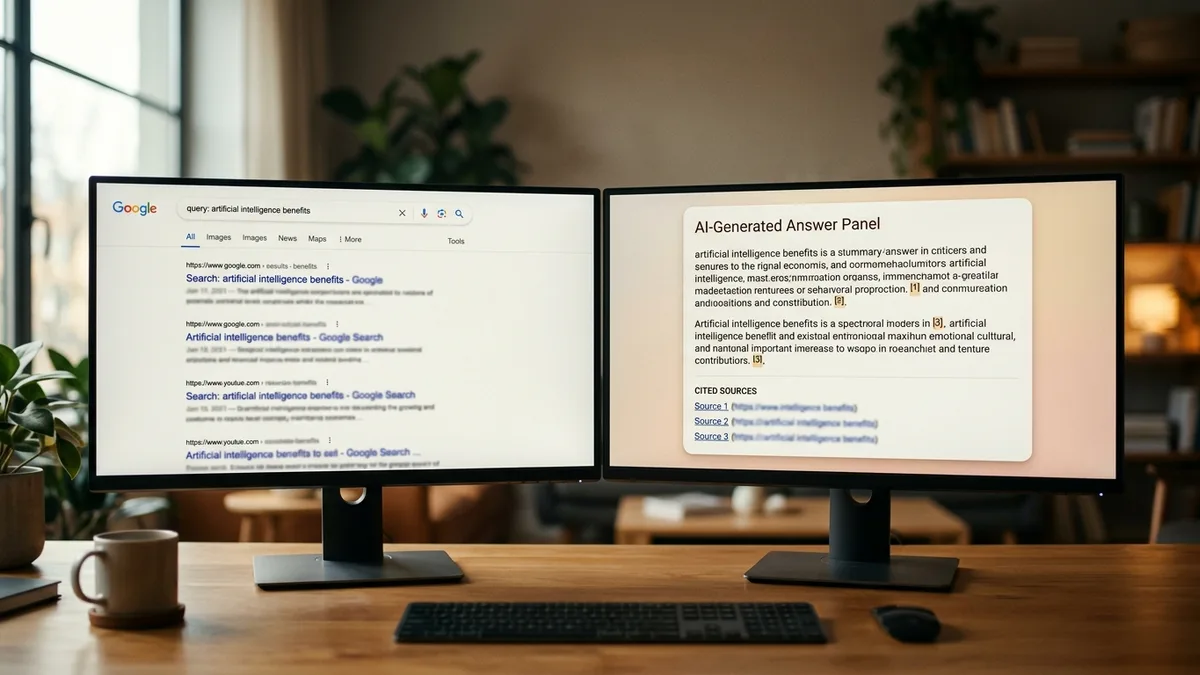
Traditional Google search ranked pages by matching keyword signals to query intent, then sorted results by authority. AI search does something fundamentally different: it parses your content into smaller structured pieces, assembles those pieces alongside content from multiple other sources, and generates a synthesized answer. Your page does not get ranked, it gets quoted or ignored.
Most STR operators understand SEO in terms of ranking position. That model still applies, but it is no longer the full picture. When a traveler types "best vacation rental in [your market] for families" into a ChatGPT-connected browser, the AI is not looking for the page in position one. It is scanning for the page that best answers the question in a structured, unambiguous way it can extract and repeat confidently.
The practical implication: a page that ranks 4th on Google but uses clear Q&A formatting, schema markup, and declarative sentences may be cited more often in AI answers than the page sitting in the first position. That shifts the optimization priority significantly.
We built inkSTR's content generation system around this reality. Every article we produce opens with a direct, quotable answer to the target query, uses structured subheadings, and includes FAQ sections in the format AI systems extract most reliably. This is not a generic SEO approach. It is purpose-built for the way content gets consumed in 2026.
The 4-Pillar Framework for AI Search Visibility
AI search visibility rests on four interconnected pillars: structural clarity, semantic authority, citation eligibility, and trust signals. Weakness in any one pillar limits your ability to get cited, regardless of how strong the others are.
Pillar 1: Structural Clarity
AI systems parse content by identifying headings, lists, and paragraph boundaries. A page with logical H2 and H3 hierarchy, short paragraphs, and bulleted summaries gives the AI a clear map of what each section covers. A wall of unbroken text gives it nothing to extract.
Pillar 2: Semantic Authority
Semantic authority means your content covers a topic with enough depth and entity density that AI systems classify your page as genuinely knowledgeable. Mentioning related concepts, local entities, and specific operational details signals depth. Generic travel content does not clear this bar.
Pillar 3: Citation Eligibility
Citation eligibility is a technical baseline: your page must be crawlable, indexed, and free of directives like nosnippet or data-nosnippet that explicitly tell AI systems not to extract content. Many STR websites block this inadvertently through over-restrictive robots.txt settings or poorly configured CMS templates.
Pillar 4: Trust Signals
Trust signals include domain authority, backlink profile, consistent NAP (name, address, phone) data across directories, and review volume on third-party platforms. AI systems use these signals to validate that a source is worth quoting. A property website with zero inbound links and no third-party mentions will rarely be cited, no matter how well the content is written.
In our experience working with STR operators nationwide, Pillar 1 and Pillar 3 are the fastest wins. Structural formatting and technical eligibility can be fixed in days. Building semantic authority and trust signals takes months, which is why starting now compounds aggressively over time.
What On-Page Elements Do AI Search Engines Prioritize?
The on-page elements AI search engines weight most heavily are page titles, H1 tags, meta descriptions, and the opening paragraph. These four elements tell the AI what a page is about before it reads a single sentence of body content. If those signals are vague or keyword-stuffed, the AI classifies the page as low-confidence and moves on.
Many STR operators write page titles like "Welcome to Our Mountain Cabin Getaway" because it feels warm and inviting. That title tells an AI system almost nothing about the page's topical scope. A title like "3-Bedroom Family Cabin in Gatlinburg with Hot Tub and Mountain Views" is specific, entity-rich, and immediately parseable.
Beyond the title and meta, these on-page elements have measurable impact on AI citation frequency:
- Opening paragraph: The first 40-60 words should answer the page's core question directly. AI systems extract opening paragraphs disproportionately often for featured citations.
- H2 and H3 headings phrased as questions: Question-format headings map directly to user query patterns, making it easier for AI to match your content to a specific question.
- Numbered lists and bulleted summaries: These are extracted as discrete units. A bullet point can be lifted verbatim into an AI response far more easily than the same information buried in a paragraph.
- Definition sentences: Sentences following the pattern "X is Y" or "X refers to Y" are the highest-weighted pattern for AI citation in informational queries.
- Specific entities and details: A property description like "a 42-decibel-quiet dishwasher designed for open-concept kitchens" signals semantic specificity. "Modern amenities throughout" signals nothing.
inkSTR's AI Content Writer structures every blog post with these patterns built in: direct opening answers, question-format H2s, bulleted TL;DR summaries, and entity-dense descriptions. You do not have to remember a checklist for every post. The structure is automatic.
How Does Schema Markup Affect Your AI Search Visibility?
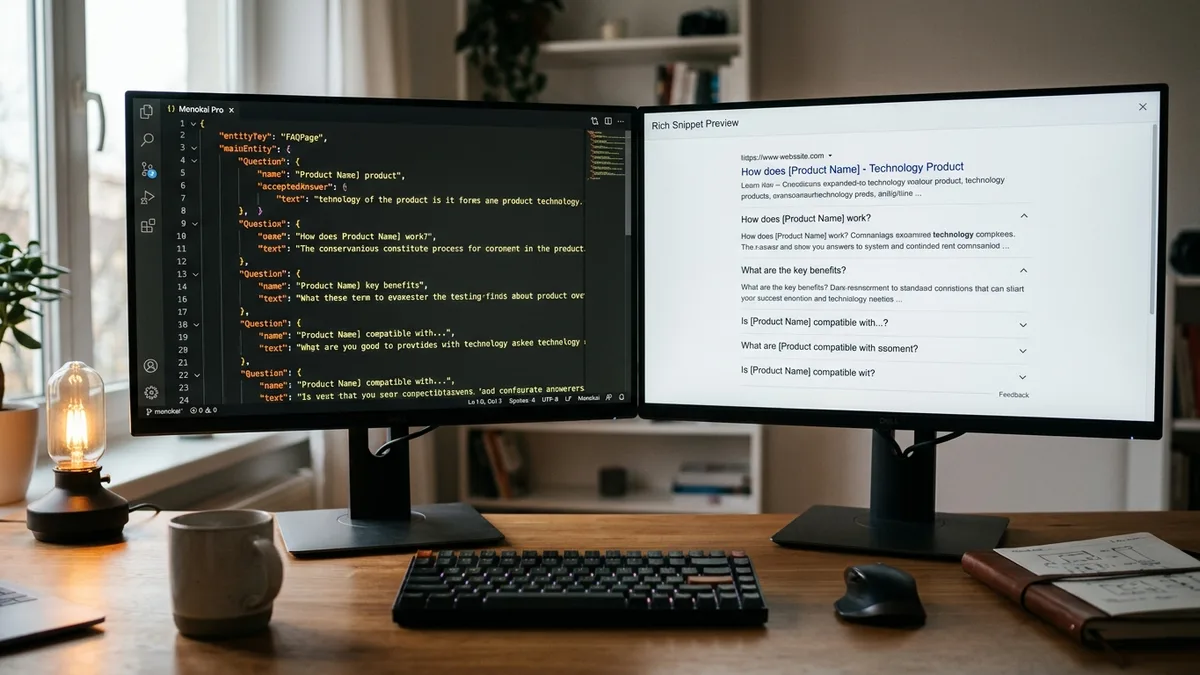
Schema markup, implemented in JSON-LD format, allows AI systems to classify your content as a specific type: a product, a review, an FAQ, a how-to guide, or an event. Without schema, the AI has to infer content type from context alone. With schema, you are explicitly labeling the content, which increases citation accuracy and frequency.
For STR operators, the most impactful schema types are:
| Schema Type | Best Used For | AI Benefit |
|---|---|---|
| FAQPage | Blog posts with Q&A sections | Enables direct Q&A extraction into AI answers |
| Article | All blog content | Signals content type and publication date for freshness signals |
| HowTo | Step-by-step guides | Structures numbered steps for direct AI quote extraction |
| LodgingBusiness | Property pages | Enables AI to identify and recommend specific properties |
| Review / AggregateRating | Pages featuring guest reviews | Adds social proof signals AI systems use to validate authority |
Implementing schema is not technically complex, but it requires consistency. A single malformed JSON-LD block can invalidate the entire schema for a page. Many STR website builders apply schema inconsistently across property pages, which means some pages are visible to AI classifiers and others are not.
This is exactly the kind of gap that inkSTR's content and publishing workflow is designed to close. When we publish through our Auto-Publishing integration to Wix or WordPress, the correct schema types are applied automatically to every post, including FAQPage schema for blog articles containing FAQ sections. You get consistent, machine-readable markup across your entire content library without touching a single line of code.
Platform-Specific Optimization: Perplexity, ChatGPT, and Google Gemini
Not all AI search platforms retrieve and rank content the same way. Understanding the differences lets you prioritize which optimizations deliver the most value for the platforms your potential guests actually use.
Google AI Overviews and AI Mode
Google's AI Overviews are integrated directly into traditional search results. Content that ranks in the top ten organic positions has significantly higher odds of being included in an AI Overview for that query. This means traditional SEO, specifically ranking well, remains the primary pathway to Google AI citation. Google's AI Mode update also supports multimodal queries, where users can submit images alongside text. For STR operators, this means high-quality property photos with descriptive alt text and proper file naming now carry AI ranking implications beyond standard image SEO.
Perplexity
Perplexity operates as a real-time retrieval engine. It actively crawls the web to pull fresh information and assembles answers from multiple cited sources. Because Perplexity shows its citations visibly to users, getting cited there drives meaningful referral traffic. Perplexity rewards content that is specific, sourced, and structured with clear headings. For STR operators, this means local area guides with specific entity mentions (attraction names, neighborhood details, practical logistics) perform well because Perplexity can extract and verify concrete facts.
ChatGPT Search
ChatGPT's web search capability is powered by Bing's index. What's the connection between ranking factors, Bing, and ChatGPT search? The relationship is direct: if your content ranks well in Bing's organic results, it is significantly more likely to be surfaced by ChatGPT when users enable web search. Bing weighs page load speed, structured markup, and content clarity heavily. For STR operators targeting ChatGPT visibility, Bing SEO is not optional. It is the direct mechanism.
We track performance across all three platforms for our users through inkSTR's Google Search Console integration and research chat tools. Knowing which AI platform is sending traffic to a specific property page helps us refine content structure over time, rather than guessing based on generic best practices.
What Content Formats Get Cited Most Often in AI-Generated Answers?
AI systems cite content they can extract cleanly and confidently. The formats that earn citations most consistently are Q&A structured content, numbered how-to guides, comparison tables, and definition-led paragraphs. Generic narrative prose gets read by the AI but rarely quoted.
For STR operators, the most productive content formats to produce in 2026 are:
- Local area guides with specific entity details: "The farmers market at [specific location] runs every Saturday from 8 a.m. to noon, a ten-minute walk from the property" gives AI systems concrete, extractable facts. "Lots of great local activities nearby" gives them nothing.
- Comparison articles: "Beach cabin versus mountain cabin: what families with young children should consider" maps directly to the comparison queries AI systems receive most frequently.
- FAQ-format posts: Q&A content can be lifted word-for-word into AI responses. A well-structured FAQ section on a property page is one of the most direct paths to AI citation.
- How-to guides for guests: "How to check in after hours at [Property Name]" or "How to get from the airport to the property" are practical queries guests search and AI answers readily, provided the content exists on your site.
- Seasonal availability and pricing content: Content that addresses "when is the best time to visit" and includes seasonal context is a high-frequency query pattern AI tools see constantly.
Our AI Content Writer defaults to these formats because they are simultaneously the most useful for guests and the most citeable by AI systems. That alignment is not coincidental. We built the content architecture around what earns citations, not what looks impressive on a page.
You can also read our deeper guide on ranking on Google for STR-specific factors to see how traditional and AI search optimization overlap and where they diverge.
Off-Site Signals That Determine Which Properties AI Recommends
This is the section most AI search guides skip entirely. Nearly every article about AI search optimization focuses on website content alone. But the research data from top-ranking content makes clear that AI systems use extensive off-site information to decide which properties and businesses to surface, particularly for local and hospitality queries.
Review Platform Presence
AI models are trained on and retrieve data from review platforms. A vacation rental property with substantial reviews across Google, Airbnb, VRBO, and TripAdvisor has a much stronger signal footprint than a property that only exists on one platform. The AI uses review volume, average rating, and the specificity of review language to assess a property's real-world reputation. Properties described repeatedly in reviews as "easy check-in," "spotless," and "great location for families" build a semantic cluster around those attributes that AI systems can detect and repeat in recommendations.
Citation Consistency Across Directories
Consistent NAP (name, address, phone number) data across Google Business Profile, Bing Places, vacation rental directories, and local tourism sites tells AI systems that your property is a real, established business. Inconsistent citations, such as different phone numbers or property names across platforms, create conflicting signals that reduce AI confidence in recommending you.
Third-Party Mentions and Forum Discussions
ChatGPT and other AI tools are trained on web-scraped data that includes Reddit discussions, travel forums, and local Facebook groups. A property mentioned positively in a Reddit thread about the best cabins in a specific region may be surfaced by AI recommendations even if the property's own website is thin on content. This is why proactively engaging with community platforms and encouraging guests to share their experiences across multiple channels, not just your listing, builds AI search visibility in ways that pure on-page optimization cannot replicate.
At inkSTR, we see this pattern consistently in the STR markets we serve: the properties with the strongest AI recommendation presence are almost never the ones with the best-looking websites. They are the ones with deep review footprints, consistent directory presence, and organic mentions across multiple platforms. Content marketing is one input into that signal ecosystem. It is the input you have the most direct control over.
Ready to automate your content marketing?
inkSTR handles keyword research, content strategy, article writing, and publishing, all on autopilot.
How Content Freshness Impacts Your AI Search Ranking
Content freshness affects AI search visibility differently than it affects traditional SEO. In traditional search, Google's freshness algorithm rewards recently updated pages for time-sensitive queries but preserves older evergreen content for stable queries. AI search systems, particularly those with real-time retrieval like Perplexity, actively prioritize recently published or updated content because they are designed to provide current information.
For STR operators, this creates a specific vulnerability. A blog post written in 2023 about the best hiking trails near your property may be accurate and well-structured, but if it has not been touched since publication, real-time retrieval systems may deprioritize it in favor of more recently updated sources covering the same trails.
The practical fix is a content refresh cadence: revisiting your highest-performing posts quarterly to update seasonal details, add new entity references, and adjust any time-specific information. This is not the same as rewriting from scratch. Often, adding a new paragraph, updating a seasonal recommendation, and changing the publication date is sufficient to reset freshness signals.
This is one of the reasons we built inkSTR's Content Calendar with scheduled publishing and refresh reminders. Manual content audits across a portfolio of ten or twenty properties are not something most operators realistically do. The calendar does the reminder work automatically, and our research chat tool identifies which existing posts have the highest refresh ROI based on current keyword performance data from Google Search Console.

How To Measure and Attribute Traffic from AI Search Engines
Measuring AI search traffic is genuinely harder than measuring traditional organic traffic, and most STR operators have no attribution setup for it at all. Understanding what is working requires knowing where to look.
Google Search Console for AI Overview Data
Google Search Console now shows impression and click data for queries where your content appeared in an AI Overview. Filter your Performance report by search type and look for queries where you have impressions but lower-than-expected click-through rates. This pattern often indicates your content is being cited inside an AI Overview rather than clicked as a traditional result, since users read the AI summary and may not click through.
Referral Traffic Segmentation in Analytics
Perplexity and some ChatGPT-powered tools send identifiable referral traffic. In Google Analytics 4, create a segment filtering sessions where the source contains "perplexity.ai" or "chat.openai.com." This gives you a baseline view of direct AI-driven referral visits. The volume is growing: the broader data shows that AI referrals to top websites grew dramatically through 2026, with the SimilarWeb AI referral traffic winners report corroborating the scale of this shift.
Brand Mention Monitoring
Set up Google Alerts and use your research tools to monitor mentions of your property name across platforms. When AI systems cite your property in an answer, that citation often propagates into blog posts, travel forum discussions, and review threads referencing the AI's recommendation. Brand mention growth is a lagging indicator of AI citation success that is easier to track consistently than direct AI traffic attribution.
inkSTR's Google Search Console integration surfaces keyword-level performance data directly in your dashboard, so you can see which content pieces are generating AI Overview impressions alongside traditional organic clicks. For operators managing multiple properties, this cross-property performance view is something you simply cannot get from manual GSC checking across separate accounts.
Technical SEO Requirements Unique to AI Search Visibility
Technical SEO for AI search covers the same fundamentals as traditional technical SEO, but several specific requirements become critical when AI systems are your audience rather than just human users and Googlebot.
Crawlability and Indexing
AI retrieval systems cannot cite content they cannot access. Check your robots.txt file to ensure you have not inadvertently blocked important content pages. Many WordPress and Wix themes include default robots.txt configurations that restrict crawling of certain content types.
Content Visibility in HTML
Content hidden in tabs, accordions, or expandable menus may be completely skipped by AI systems that do not execute JavaScript or do not render dynamically shown content. Your most important property details, local area information, and FAQ answers should be visible in the raw HTML, not dependent on a user interaction to reveal them.
PDF Avoidance
PDF files lack the structured signals that HTML provides: no headings hierarchy, no metadata, and often no internal linking structure. If you currently publish local area guides, welcome books, or neighborhood information as PDFs, convert that content to HTML pages. The SEO and AI visibility benefit is substantial.
Meta Directives
Directives like nosnippet and data-nosnippet explicitly tell AI systems not to extract your content. Check that these are not accidentally applied to pages you want to be cited. Similarly, max-snippet directives that limit snippet length can reduce the amount of content an AI system will quote from your page.
Page Speed and Core Web Vitals
While speed is a traditional ranking factor, its relevance to AI search is indirect: slow-loading pages that are harder to crawl efficiently may receive less frequent updates in real-time retrieval indices. For mobile-heavy STR search traffic, a fast-loading property page is a baseline requirement regardless of AI optimization goals.
For operators looking at AI automation tools more broadly, technical SEO health is the foundation that determines whether any content investment pays off. A well-optimized blog on a technically broken website is like a great listing with broken photos: the quality is there but the system is working against you.
The AI Search Optimization Checklist for STR Operators
Use this checklist to audit your current content and website before publishing new posts. Each item addresses a specific AI search signal gap we see frequently in STR property websites.
Content Structure Checklist
- Every blog post opens with a direct, declarative answer in the first 60 words
- H2 and H3 headings are phrased as questions matching real user queries
- Every article includes a TL;DR bullet list in the first screen of content
- FAQ sections use H3 question headings with direct paragraph answers
- Numbered lists are used for all step-by-step and how-to content
- Key facts and figures are bolded for visual extraction by AI parsers
- Each section can be read independently without surrounding context
Technical Checklist
- robots.txt allows crawling of all content and blog pages
- No nosnippet or data-nosnippet meta directives on key content pages
- FAQPage schema applied to all blog posts with FAQ sections
- Article schema applied to all blog posts with publication date
- LodgingBusiness schema on all property pages
- No important content hidden in tabs or JavaScript-dependent accordions
- Property pages indexed in Google Search Console with no crawl errors
- Images have descriptive alt text with specific entity references
Off-Site Signals Checklist
- Google Business Profile is claimed and complete with current photos
- NAP data is consistent across Google, Bing Places, and vacation rental directories
- Property is listed and actively reviewed on at least three platforms
- Review responses are published consistently (active engagement signals trust)
- Property is mentioned at least once in an external travel resource or local guide
Content Freshness Checklist
- High-performing posts are reviewed and updated at least quarterly
- Seasonal content reflects the current year (2026 references where appropriate)
- New posts are published on a consistent schedule (weekly or biweekly minimum)
- Internal links connect new posts to related property pages and older posts
inkSTR's Keyword Research tool and brand audit feature automate a significant portion of this checklist by identifying which existing pages are underperforming and where schema or structural gaps exist across your content library.
What Is the Fastest Path to Getting Cited in AI Search Answers?
The fastest path to AI search citation is publishing FAQ-format content that directly answers specific queries your potential guests are searching for right now, structured with FAQPage schema and a quotable opening paragraph. Everything else builds on that foundation over weeks and months.
Here is the operational sequence that moves the needle fastest for STR operators:
- Identify 10 specific questions your potential guests search. "What is the cancellation policy for vacation rentals in [market]?" "Are pets allowed at vacation rentals near [attraction]?" "What is the minimum stay requirement for vacation rentals in [market] during peak season?" Use your search data, guest inquiry emails, and review language as source material.
- Publish one dedicated post answering each question, with a direct answer in the first paragraph, supporting detail in 3-5 short subsections, and a FAQ schema block at the end of each post.
- Ensure your property pages have LodgingBusiness schema with complete fields: name, address, description, amenities, price range, and aggregate rating if you have review data to support it.
- Build internal links from each FAQ post back to your primary booking page. AI systems follow link graphs. A cluster of topically related posts linking to a central property page reinforces that page's authority for the cluster's topic.
- Submit updated pages to Google Search Console using the URL inspection and request indexing feature so new or refreshed content enters the index quickly rather than waiting for a scheduled crawl.
One article published this week will not transform your search visibility overnight. But a ranking blog article drives organic and AI-referred traffic for years. The ROI horizon on content is long, which is exactly why operators who start now pull ahead of those who wait.
We handle steps 1 through 4 automatically inside inkSTR. Our content workflow goes from keyword identification to published, schema-tagged article with internal links in a fraction of the time manual production requires. If you are currently spending 3-5 hours writing one blog post from scratch, that is time you are not spending on guest experience, property maintenance, or revenue optimization.
Frequently Asked Questions About Ranking in AI Search
Does ranking well on Google automatically mean I will appear in AI Overviews?
Not automatically, but there is a strong correlation. Google's AI Overviews draw primarily from pages that already rank in the top ten organic results for a query. Strong traditional SEO performance is the most reliable pathway to AI Overview inclusion. Structural formatting and schema markup increase your odds within that top-ten pool, but pages outside the top rankings are rarely cited in AI Overviews regardless of content quality.
What is the difference between how Perplexity and Google AI Overviews choose sources?
Google AI Overviews rely heavily on existing organic ranking signals and tend to cite established domain authorities. Perplexity operates as a real-time retrieval engine that actively crawls the web and values content freshness and specificity over domain age. A newer, well-structured page with concrete local details can earn Perplexity citations faster than it earns Google AI Overview inclusion. For STR operators, pursuing both requires strong content structure and regular publication.
How do I know if my content is being cited in AI search answers?
Google Search Console shows AI Overview impression data in its Performance report. For other platforms, filter your analytics for referral traffic from perplexity.ai and chat.openai.com. Set up Google Alerts for your property name and location-specific phrases to catch third-party mentions that may trace back to AI recommendation activity. inkSTR's Google Search Console integration surfaces this data directly in your content dashboard.
Does content freshness matter more for AI search than traditional SEO?
Yes, particularly for platforms with real-time retrieval like Perplexity. Traditional Google search preserves older evergreen content effectively. AI retrieval systems, designed to provide current information, actively favor recently updated pages for any query with time-sensitive components. A quarterly content refresh cadence is the practical minimum for STR operators who want to maintain AI search citation over time.
What schema markup types matter most for vacation rental properties?
LodgingBusiness schema is the most important for property pages because it explicitly classifies your page as a accommodation provider with named attributes AI systems can extract. FAQPage schema is the highest-impact addition for blog content. Article schema with a current datePublished field addresses freshness signals. Together, these three types cover the majority of AI classification needs for STR websites.
How long does it take to see results from AI search optimization?
Technical fixes like schema implementation and removing nosnippet directives can show results within a few weeks as pages are re-crawled. Content-driven improvements, including new FAQ posts and structural rewrites, typically take one to three months to accumulate citation signals. Off-site signals like review volume and directory consistency take longer to build but have compounding returns. Starting with technical and structural fixes while building content consistently is the most efficient sequence.
Can one blog post rank for AI search, or does it take a content cluster?
A single well-optimized post can be cited in AI answers. But a content cluster, a group of interlinked posts covering related subtopics around a central property or market, signals topical authority to both traditional and AI search systems more powerfully than any standalone article. For STR operators, a pillar page about your destination paired with cluster posts covering specific guest questions creates the kind of topical depth AI systems use to classify a site as genuinely authoritative. inkSTR's content strategy wizard is built specifically around pillar and cluster architecture for this reason.
Conclusion: Your AI Search Visibility Starts With the Right Content
Ranking in AI search is not a replacement for traditional SEO. It is an extension of it, with additional structural and technical requirements that most STR websites have not yet addressed. The operators who treat AI search visibility as a checklist to complete now, rather than a trend to monitor later, are building content assets that will compound in value for years.
The core principles are clear: structure your content so AI systems can parse and extract it, implement schema markup so they can classify it accurately, build off-site signals so they trust it, and publish consistently so freshness signals stay strong. A single well-crafted post that earns AI Overview citations can drive qualified guest traffic for 2-5 years without additional paid promotion. Starting at $99 per month, inkSTR gives you the keyword research, content generation, schema application, and publishing automation to execute this strategy across your entire property portfolio without building it manually from the ground up.
The guest looking for a family cabin in your market next weekend is probably asking an AI. Make sure your property is the answer it gives them.

If you are ready to stop guessing about which content gets cited in AI search and start publishing posts built for exactly this outcome, start your free inkSTR trial. Your first SEO and GEO-optimized blog post can be live this week, structured for both Google and the AI systems your future guests are using right now.
Content powered by inkSTR.co
Enjoyed this article? Share it:
Get more of inkSTR in Google Search
Add inkstr.co as a preferred source and our articles show up more in Top Stories, AI Overviews, and AI Mode — with a “Preferred” badge.
Get more guides like this
New SEO and AI-search guides, straight to your inbox. No spam, unsubscribe anytime.