How to Create a Local Area Guide for Your Vacation Rental
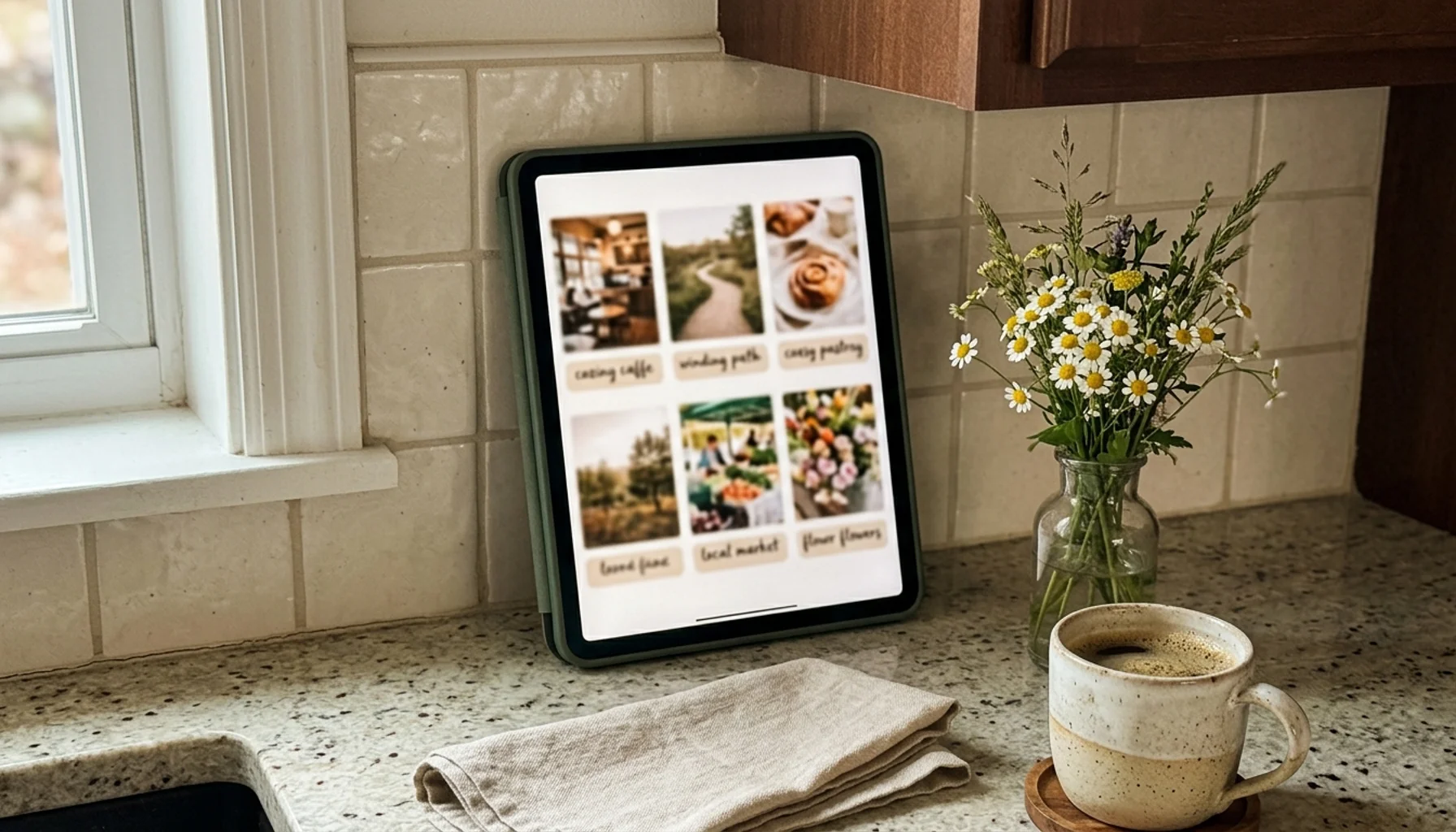
A local area guide for a vacation rental is a curated list of nearby restaurants, activities, essentials, and insider tips that helps guests plan their stay without messaging the host. The strongest guides skip generic tourist listings and instead group five to ten specific, host-tested recommendations into categories guests actually search for: where to eat, what to do, and how to get around.
Key Takeaways
- A local area guide works best with 5 to 10 curated recommendations per category rather than an exhaustive directory that overwhelms guests.
- Digital guidebooks that hosts can update remotely outperform printed binders because listings close, hours change, and static PDFs go stale within months.
- The highest-performing guides are organized by guest need (breakfast, groceries, rainy-day activities) rather than by neighborhood or street.
- Industry research shows 38% of vacation rental industry traffic comes from organic search, according to CUFinder's 2026 data, meaning a well-written area guide published as a blog post can also pull in new direct booking traffic, not just serve existing guests.
- Most experts recommend refreshing a local guide twice a year to catch closures, new openings, and seasonal changes.
- inkSTR's AI Content Writer turns a property's location and amenities into a publish-ready local area guide blog post, so the same content that helps guests in-stay can also rank on Google and drive direct bookings before they ever arrive.
If you manage a short-term rental in 2026, guests expect more than a laminated sheet of restaurant names taped to the fridge. They expect a guide that reads like it was written by someone who actually lives there, updated recently, and organized around what they're going to do that day rather than a random list of attractions. Most hosts either skip this entirely or throw together something once at listing setup and never touch it again.
This guide walks through exactly how to build a local area guide that guests read, use, and mention in reviews, including which sections to include, how to write each recommendation, and the mistakes that make most guides forgettable. We'll also cover something almost no other guide on this topic addresses: how to turn your local area guide into a piece of content that ranks on Google and drives new direct bookings, not just a document that sits in a folder for existing guests.
At inkSTR, we work with hosts and property managers across markets ranging from beach towns to mountain retreats, and the local area guide is consistently one of the most underused assets in a host's marketing toolkit. It solves two problems at once: guest experience during the stay, and search visibility before the booking happens. Most hosts only build it for the first reason.
What Should a Vacation Rental Local Area Guide Include?
A complete local area guide includes five core sections: where to eat, groceries and essentials, things to do, getting around, and emergency information. Beyond that structural skeleton, the best guides add a sixth layer, a short list of genuine insider tips, the kind of thing you'd tell your best friend visiting for the first time.
Specifically, each recommendation should run two to three sentences: one line explaining why you picked the place, and one practical detail such as distance, hours, or whether it's cash only. A recommendation that just says "Great local diner" tells the guest nothing they couldn't get from a map app. A recommendation that says "This diner is a five-minute walk, cash only, and locals line up for the biscuits before 9am on weekends" gives them a reason to go and a reason to trust you.
Groceries and essentials matters more than most hosts realize. Guests arriving late at night or renting for a week want to know the nearest pharmacy, the closest grocery store with reasonable hours, and where to find an ATM. This section rarely makes it into a host's first attempt at a guide, and it's one of the fastest ways to reduce day-one guest messages.
For things to do, resist the urge to list every attraction within an hour's drive. As a general rule, five walks or outdoor spots, five restaurants, and five attractions is enough to start. Add a couple of bad-weather options and at least one activity that works for families with young kids, since that's a gap most guides never address.
Should You Use a Digital Guidebook or a Printed Book?
A digital guidebook is a web-based or app-based local area guide that hosts can update remotely, typically shared through a link or QR code before or at check-in. A printed guide is a physical binder or sheet left in the property. As of 2026, digital formats have a clear structural advantage: you can fix a closed restaurant listing in thirty seconds instead of reprinting and replacing a binder.
Printed guides still have a role. A laminated one-pager with WiFi password, checkout time, and emergency contacts covers the absolute basics guests need even if their phone dies. But the bulk of your actual local knowledge, the restaurant picks, the activity suggestions, the seasonal notes, belongs in a format you can edit without a trip to the property.
Here's where most hosts get the tradeoff wrong. They either go all-in on a printed book that becomes outdated within two seasons, or they build a beautiful digital guidebook and never think about it again after initial setup. Neither approach treats the guide as a living asset. Specifically, a digital guidebook only stays useful if someone owns the update cycle.
The other advantage of digital: it can double as content. A guidebook page with well-written, specific local recommendations is structurally similar to a blog post, and in some cases you can adapt the same research directly into an article for your website. This is a connection almost no guidebook company mentions, because their business model ends at the guest-facing tool. We built inkSTR's AI Content Writer specifically because that same local knowledge you're gathering for guests is exactly what search engines and AI assistants reward when a traveler searches "things to do near [your property]."
How Do You Organize Recommendations So Guests Actually Use Them?
The most effective local area guides organize recommendations by guest need, not by geography. Grouping by category, breakfast, groceries, lunch, dinner, drinks, outdoor activities, rather than by street or neighborhood, matches how a guest actually thinks through their day. Nobody plans a trip by asking "what's on Elm Street." They ask "where do we get coffee this morning."
As a result, your section headers should mirror a guest's actual decision points: Coffee and Breakfast, Lunch, Dinner, Drinks and Nightlife, Beaches or Parks and Outdoors, Must-Do Local Experience, and Things to Skip. That last category, places to avoid, is one of the highest-trust elements you can add, and it's rare to see it done well.
A line like "Skip the seafood place on the main strip, it looks busy but the portions don't match the price, we prefer the smaller spot two blocks over" builds more credibility than ten glowing recommendations. It signals the guide was written by someone with real opinions, not scraped from a search results page.
For groceries and essentials, additionally list the nearest pharmacy, the closest ATM, and, if relevant, an accessible entrance or step-free route for guests with mobility needs, a detail almost no local guide addresses even though it matters enormously to a subset of your guests. Age-specific notes help too: flag which activities work for toddlers and which spots skew toward an adults-only crowd.
How Often Should You Update Your Local Area Guide?
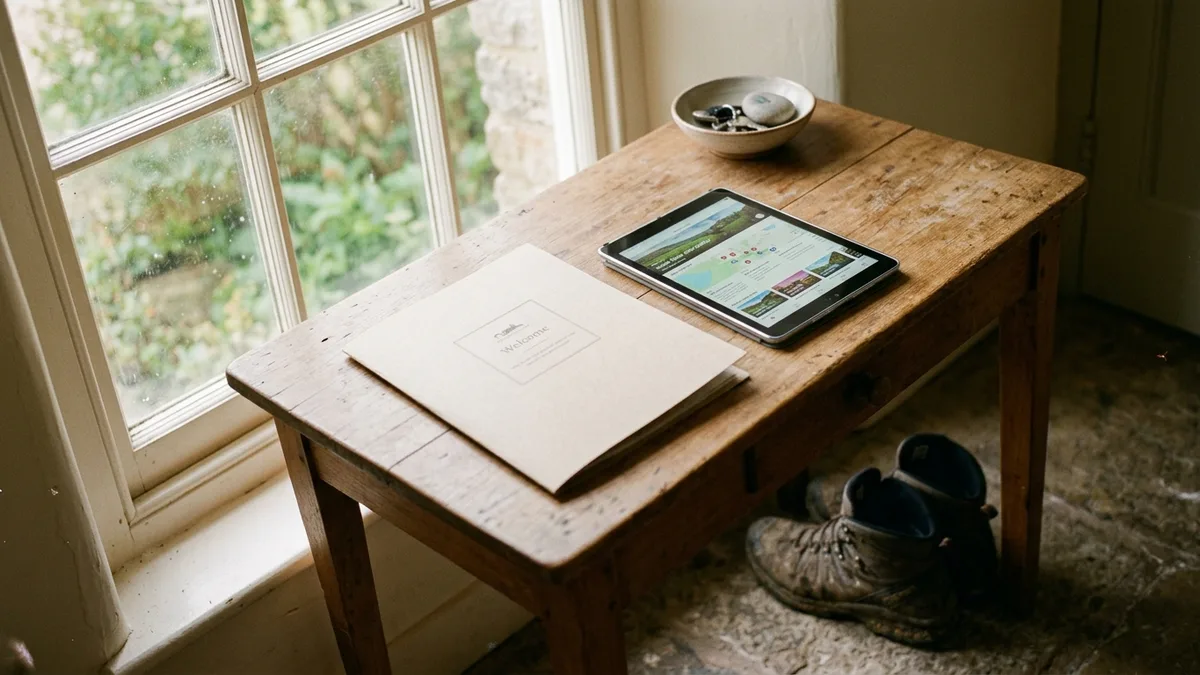
A local area guide should be reviewed and updated at least twice a year, once before peak season and once after, to catch closures, new openings, and seasonal hour changes. A guide that recommends a restaurant that closed eight months ago does more damage to guest trust than having no guide at all.
In our experience working with STR operators, the update cycle is the single most neglected part of guide maintenance. Hosts pour hours into building the initial version, then never revisit it because there's no system reminding them to check it. Meanwhile the coffee shop on the corner changes hands, the hiking trail closes for erosion repair, and the guide keeps recommending both.
Specifically, build a habit around two checkpoints a year: verify hours and open status for every listed business, confirm nothing has closed, and add anything new and notable that's opened since your last pass. If you manage multiple properties, this compounds fast. Twenty properties means checking, in the worst case, two hundred individual recommendations twice a year by hand.
This is exactly the kind of repetitive content maintenance that eats a property manager's week without moving the needle on bookings. If you're already managing content refreshes across a portfolio, our guide to must-have tools for short-term rental managers scaling up covers the broader systems that keep this kind of work from becoming a full-time job on its own.
Can a Local Area Guide Help You Rank on Google?
Yes. A well-written local area guide, published as a blog post on your vacation rental website rather than only as a private guest document, targets the exact search queries travelers type before they book: "things to do near [town]" or "best restaurants near [neighborhood]." According to ShortTermRentalz's 2023 research, 42% of US leisure travelers said Google Search impacted their decision on travel provider for their last trip.
Most hosts treat their local guide as a private, guest-only asset locked inside a booking confirmation email or a guidebook app. That's a missed opportunity. The same research and writing effort that goes into a guest-facing guide can become a public blog post that ranks for local search terms and pulls in travelers who haven't booked anywhere yet.
Specifically, this means duplicating your work with intention: keep the private, detailed guest version for in-stay use, and publish a public-facing version on your website optimized for search, with the property's neighborhood, nearby attractions, and specific restaurant names woven throughout. CUFinder's 2026 data shows organic search already drives 38% of vacation rental industry traffic, more than any other single channel.
This is precisely the content gap inkSTR's Keyword Research tool is built to close. Instead of guessing which local search terms travelers use, the platform surfaces the specific phrases guests type when researching a destination, so your local area guide blog post targets real demand instead of guesswork. For more on getting your property found this way, see our piece on how to rank your vacation rental website on Google.
How Long Does It Take to Write a Local Area Guide (And Is It Worth Your Time)?
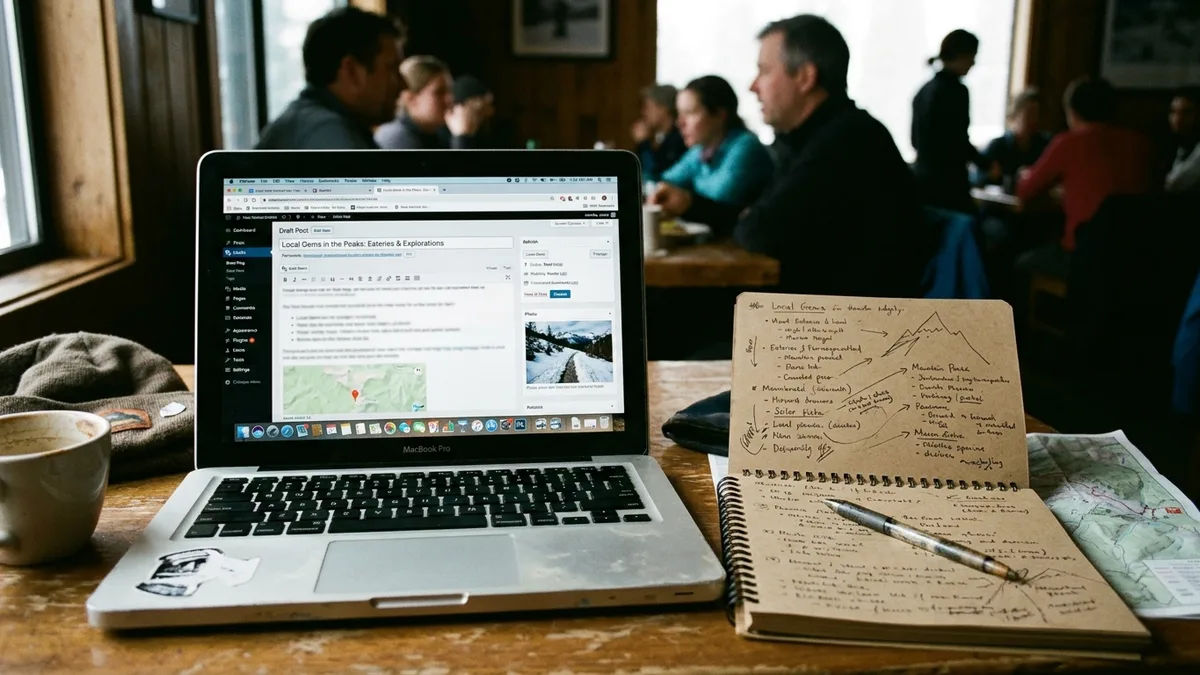
Writing a genuinely useful local area guide, one with real recommendations and practical details rather than scraped listings, typically takes three to five hours of research and writing per version, similar to the time investment for any quality blog post. Multiply that across ten or twenty properties in different markets and the math stops working for most operators.
Here's the part that stings: a freelance travel writer who could do this well charges $300 to $700 per piece, and that's before you factor in the back-and-forth of getting local details right for a market they've never actually visited. Hire a writer for twenty properties and you're looking at a bill that rivals a month of rent on the properties themselves.
Meanwhile, if you skip the exercise entirely, you're leaving both problems on the table: guests still message you asking where to eat, and your website still has zero content targeting the local search terms that drive direct bookings. Airbnb and VRBO combined take 17-19% of every booking in host and guest fees, and a single direct booking is typically worth $1,000 to $4,000 in revenue. Every guest you convert from a platform search to your own website is real money back in your pocket.
This is exactly the problem inkSTR was designed to solve. Feed the platform your property's location and amenities, and inkSTR's AI Content Writer generates a publish-ready local area guide article, structured with the same categories, essentials, and insider-tip framing covered in this guide, without the three-to-five-hour research block. Plans start at $99/month, a fraction of a single freelance article, and a ranking blog post can drive organic traffic for two to five years after it publishes.
How Do You Add Personal Voice and Insider Tips Without Sounding Generic?
A local area guide with genuine insider voice includes at least one recommendation that only someone who's actually lived in or repeatedly visited the area would know, the kind of tip you'd give a close friend rather than a stranger reading a brochure. This is the single hardest thing for competitors and generic guidebook templates to replicate, because it requires real, specific experience.
Specifically, avoid calling well-known, heavily marketed attractions a "hidden gem" or "local secret" unless you can explain, in concrete terms, why locals still go there despite the crowds. A phrase like "hidden gem" applied to a spot with a line out the door every weekend destroys the credibility you're trying to build with the rest of the guide.
Instead, be specific about timing, cost comparison, and crowd type. "The overlook gets busy by 10am on weekends, so if you want it quiet, go before 8" tells the guest something they can act on. "A beautiful hidden spot" tells them nothing.
Additionally, this is where turning your guide into blog content pays off twice. A generic, AI-written article with no specific local detail reads exactly like every other AI-written article, and both guests and search engines can tell. Our piece on why generic travel content kills conversions covers this exact failure mode in more depth. That's precisely why we built inkSTR to work from your property's actual location data and amenities rather than generic templates, producing content grounded in the specific market rather than interchangeable filler.
Ready to automate your content marketing?
inkSTR handles keyword research, content strategy, article writing, and publishing, all on autopilot.
Can a Local Area Guide Generate Revenue Beyond the Booking?
A local area guide can generate incremental revenue through partnerships with nearby businesses, curated experience bundles, and affiliate-style referral arrangements, though most hosts never explore this because they treat the guide purely as a guest amenity rather than a business asset. This is one of the biggest gaps in how hosts currently think about their local guides.
Specifically, if you consistently recommend the same tour operator, restaurant, or rental shop, a direct relationship with that business can turn a free recommendation into a referral fee or a package deal you sell as an add-on. A guide that lists "we've partnered with the kayak rental shop down the road for a 10% discount for our guests" adds value for the guest and creates a small but real revenue line for you.
Additionally, upselling a "welcome basket" featuring items from a local bakery or market you feature in the guide connects your recommendations directly to your booking page, something almost no guidebook covers because it requires coordination the tool itself can't provide.
Few hosts build this out, mostly because managing local business relationships alongside guest communication and property upkeep is a lot to juggle without dedicated marketing support. If you're thinking about your local guide as part of a broader content and revenue strategy, our article on revenue maximization for hosts covers the counterintuitive strategies that tend to outperform simply listing more amenities.
What Are the Most Common Local Area Guide Mistakes?
The most common mistake is building the guide once and never updating it, followed closely by listing too many recommendations instead of a focused, trustworthy set. A guide with forty restaurant options overwhelms guests; a guide with eight, each with a clear reason behind it, gets used.
- Overloading the guide with recommendations. Cap each category around five to ten entries. More than that and guests skim past all of them.
- Writing vague descriptions. "Great food, nice atmosphere" applies to every restaurant on earth. Name the dish, the price range, or the wait time instead.
- Never updating after initial launch. Set a recurring twice-yearly reminder to verify every listing is still open and accurate.
- Organizing by geography instead of guest need. Group by meal and activity type, not by which street something sits on.
- Skipping accessibility and family-specific notes. Step-free routes and kid-friendly flags matter to a meaningful share of your guests and almost never appear in competitor guides.
- Treating the guide as guest-only content. The same research can become a public blog post that captures organic search traffic before a guest ever books.
Property managers running multiple listings face a compounded version of every mistake on this list, since each error multiplies across every property in the portfolio. If you're managing content updates across fifteen or more properties, our guide to article automation without losing your brand voice addresses how to scale this kind of location-specific content without it turning into a full-time job.
Local Area Guide Formats Compared
| Format | Update Speed | Guest Experience | Search Visibility | Best For |
|---|---|---|---|---|
| Printed binder | Slow (requires reprint) | Works offline, no phone needed | None | Basic house rules, WiFi, emergency numbers |
| Private digital guidebook | Fast (edit anytime) | Convenient, shareable link or QR code | None (guest-only access) | Detailed in-stay recommendations |
| Public blog post local guide | Fast (edit anytime) | Available before and after booking | High, targets organic search | Attracting direct bookings, reducing OTA dependence |
| Hybrid (guidebook plus published blog) | Fast, one source updates both | Best of both, pre-arrival and in-stay | High | Hosts and managers who want guest experience plus new booking traffic |
The hybrid approach wins on every axis except initial setup time, and that's the exact gap inkSTR's Content Calendar and Auto-Publishing features close, scheduling and publishing your local guide content directly to your existing website without manual copy-paste work.
How Do You Turn a Local Area Guide Into a Repeatable Content System?
A repeatable local area guide content system means treating guide creation as an ongoing publishing workflow rather than a one-time setup task, with scheduled reviews, fresh seasonal posts, and consistent formatting across every property you manage. Most hosts never reach this stage because the first version already took hours to build.
Specifically, once you have a base local area guide for a property, you can expand it into related seasonal posts: a winter version, a guide to rainy-day activities, a roundup of the best patios for summer. Each spinoff targets a slightly different search query while reusing your core local research.
For a property management company running content across ten, twenty, or fifty units, this is where manual writing collapses. Each property needs its own guide, its own updates, its own seasonal variations, and no single person has the bandwidth to keep pace by hand.
We built inkSTR's multi-project support and Content Calendar specifically for this scenario, letting a manager run a separate, automated content pipeline for every property, each publishing local area guide content, seasonal updates, and related blog posts on its own schedule directly to Wix or WordPress through Auto-Publishing. If you want to see the full workflow from keyword to published article, our how inkSTR works page walks through each step.
Frequently Asked Questions
How many recommendations should a vacation rental local area guide include?
Most experts recommend five to ten curated recommendations per category, such as restaurants or activities, rather than a comprehensive directory. A focused list of specific, well-explained picks gets used far more than an overwhelming list of every option in town.
Should I use a digital guidebook or a printed guide for my rental?
A digital guidebook is generally the better primary format because you can update it remotely the moment a restaurant closes or hours change. Keep a short printed one-pager for essentials like WiFi and emergency contacts as a backup in case a guest's phone is unavailable.
How often should I update my vacation rental local area guide?
Update your guide at least twice a year, once before peak season and once after, checking for closures, new openings, and seasonal hour changes. A guide recommending a business that closed months ago damages guest trust more than having a shorter, accurate list.
Can a local area guide actually help me get more direct bookings?
Yes, if you publish a version of it as a public blog post rather than keeping it locked inside a private guest guidebook. Since 38% of vacation rental industry traffic comes from organic search according to CUFinder's 2026 data, a well-optimized local guide article can capture travelers researching your destination before they've chosen a property.
What's the difference between writing a local guide myself and using inkSTR?
Writing a quality local area guide manually takes three to five hours of research per version, and hiring a freelance travel writer typically costs $300 to $700 per article. inkSTR's AI Content Writer generates a publish-ready guide from your property's location and amenities for a fraction of that cost, starting at $99/month.
Should I include places to avoid in my local area guide?
Yes, a short "things to skip" section builds more trust than an all-positive list, as long as it's phrased professionally and includes a reason rather than just criticism. A line explaining why you prefer an alternative nearby reads as helpful, not negative.
Can I manage local area guides across multiple properties without hiring a writer?
Yes. inkSTR's multi-project support runs an independent content pipeline for each property, so a manager overseeing many units can generate, schedule, and publish local area guides and seasonal updates for every listing without duplicating manual work.
Final Thoughts on Building a Local Area Guide That Works
A local area guide only earns its place in a guest's itinerary when it's specific, current, and organized around what they actually need that day, not a generic list of tourist stops. Building one well takes real time, and keeping it accurate takes ongoing effort most hosts underestimate at the start.
Treat your local area guide as a dual-purpose asset: a guest experience tool during the stay, and a piece of searchable content before the booking happens. The second half of that equation is where most hosts leave value on the table, and it's exactly where inkSTR fits in as of 2026 and beyond.
If building and maintaining this kind of location-specific content across one property or fifty feels like a job you don't have time for on top of everything else, inkSTR generates, schedules, and publishes local area guide content and related blog posts automatically, so your website keeps working for direct bookings even when you're focused on guests already in-house.

If you're ready to stop rebuilding your local area guide from scratch every season, inkSTR's content workflow takes your property's location and turns it into a published, search-ready guide in a fraction of the time manual writing takes. Start a free trial and see your first draft this week.
Content powered by inkSTR.co
Enjoyed this article? Share it:
Get more of inkSTR in Google Search
Add inkstr.co as a preferred source and our articles show up more in Top Stories, AI Overviews, and AI Mode — with a “Preferred” badge.
Get more guides like this
New SEO and AI-search guides, straight to your inbox. No spam, unsubscribe anytime.