What Is a Backlink in SEO? The Complete Guide for STR Operators

A backlink in SEO is a hyperlink on one website that points to a page on another website. Search engines like Google treat each backlink as a vote of confidence, using them to measure a page's authority and decide how high it should rank. The more high-quality backlinks your vacation rental website earns, the stronger its ranking potential becomes.
- A backlink is a link from one website to another; Google treats it as a trust signal and uses it to determine search ranking authority.
- Dofollow backlinks pass link equity (also called "link juice") and directly influence rankings; nofollow backlinks use a rel="nofollow" attribute and tell search engines not to pass ranking value, though Google may still use them as ranking hints.
- According to a 2026 WebFX study of 1,462 domains across 15 industries, websites ranking on page one have a median of 907 referring domains, and editorial links account for 92.2% of all backlinks pointing to top-ranking sites.
- High-quality backlinks come from relevant, authoritative websites and are placed editorially within the main body of the content, not buried in footers or sidebars.
- Building backlinks for a short-term rental website requires a content-first approach: publish articles, local guides, and resources that other sites genuinely want to reference.
- inkSTR generates the SEO-optimized blog content that earns editorial backlinks organically, automating the most time-consuming part of any link-building strategy.
TL;DR
- A backlink is a link from an external website pointing to yours, and Google's PageRank algorithm uses these links to measure page authority and determine search rankings.
- Dofollow links pass ranking value; nofollow, sponsored, and UGC links use HTML attributes to signal their relationship to search engines.
- The 2026 WebFX Backlink Study found page-one sites have a median of 907 referring domains, with editorial links making up 92.2% of those backlinks.
- Building backlinks ethically requires creating content worth linking to: in-depth guides, local area resources, and data-driven articles that journalists, bloggers, and destination sites want to cite.
- Checking your backlink profile regularly protects your rankings; toxic or spammy links can be disavowed through Google Search Console.
- inkSTR's AI Content Writer generates the publication-ready, SEO-optimized blog posts that form the foundation of any credible backlink strategy for vacation rental websites.
Most vacation rental website owners understand they need to rank on Google to drive direct bookings. What fewer realize is that the content their site publishes is the primary asset that attracts the backlinks that make rankings possible in the first place. Understanding what a backlink in SEO actually is, why it matters, and how to earn one, is the foundation of any serious content marketing strategy in 2026.
At inkSTR, we work with short-term rental operators across the country who are trying to break free from OTA dependency. One of the most consistent patterns we see is this: operators who publish consistent, well-structured blog content naturally accumulate backlinks over time, while those who rely purely on listing optimization stay stuck on page three. This guide explains the mechanics behind that gap.
We will cover the core definition, the different types of backlinks, what makes one genuinely valuable, and the practical steps to earn them without risking a Google penalty. We will also address the questions STR operators search most often, including whether SEO still works in 2026, what the 3 C's of SEO are, and how to check the backlinks your site already has.

What Exactly Is a Backlink in SEO, and Why Does Google Care?
A backlink, also called an inbound link or external link, is a hyperlink placed on one website that directs a user to a different website. In SEO terms, backlinks function as third-party endorsements: when a credible website links to your vacation rental blog, it tells Google that your content is trustworthy and worth surfacing in search results. Google's original PageRank algorithm was built on exactly this logic, treating each link as a vote cast by one page for another.
The key word in that last sentence is "credible." Not all votes carry equal weight. A link from a well-established travel publication carries far more authority than a link from a brand-new directory nobody reads. Google's algorithm has become sophisticated enough to distinguish between the two, and it penalizes sites that try to game the system with low-quality links.
Backlinks also contribute directly to your site's E-E-A-T signals, which stands for Experience, Expertise, Authoritativeness, and Trustworthiness. These are the four criteria Google's quality raters use to evaluate whether a page deserves to rank. When authoritative websites in the travel, hospitality, or local destination space link to your vacation rental site, they are effectively vouching for your expertise. That vouching translates into ranking power.
For STR operators specifically, this matters because your competition is not just other individual hosts. You are competing against large property management companies and OTA landing pages with enormous backlink profiles built over years. Understanding the mechanics of what is a backlink in SEO gives you a roadmap for closing that gap strategically, rather than hoping your listing optimization alone will carry you to page one.
At inkSTR, we built our Keyword Research tool specifically because we saw how many STR operators were targeting keywords their site had no authority to rank for yet, while completely ignoring the topic clusters that could realistically earn them their first meaningful backlinks within a few months of consistent publishing.
What Are the Different Types of Backlinks in SEO?
Backlinks are not a single category of link. They vary by HTML attribute, by how they were earned, and by where they appear on the linking page. Each variation carries different weight in Google's eyes, and understanding the distinctions helps you prioritize which links to pursue and which to ignore.
Dofollow vs. Nofollow Backlinks
A dofollow backlink is the default link type. Unless a publisher adds a specific HTML attribute, any link they place is dofollow. These links pass link equity, sometimes called "link juice," from the linking page to your page. They are the links that most directly influence your search rankings.
A nofollow backlink includes the attribute rel="nofollow" in its HTML code. This attribute originally told Google to ignore the link entirely for ranking purposes. Google's stance has softened since then: the company now describes nofollow as a "hint" rather than a strict directive, meaning it may still influence rankings to some degree. Research on backlinks in AI search specifically suggests nofollow links have nearly the same impact on AI Overview visibility as follow links, which is worth noting as AI-powered search becomes more prominent in 2026.
Two additional attributes work similarly to nofollow. The rel="sponsored" attribute marks paid placements, and rel="ugc" marks user-generated content such as forum comments and blog replies. Using these correctly keeps your own linking practices clean and avoids manual penalties.
Editorial, Guest Post, and Directory Backlinks
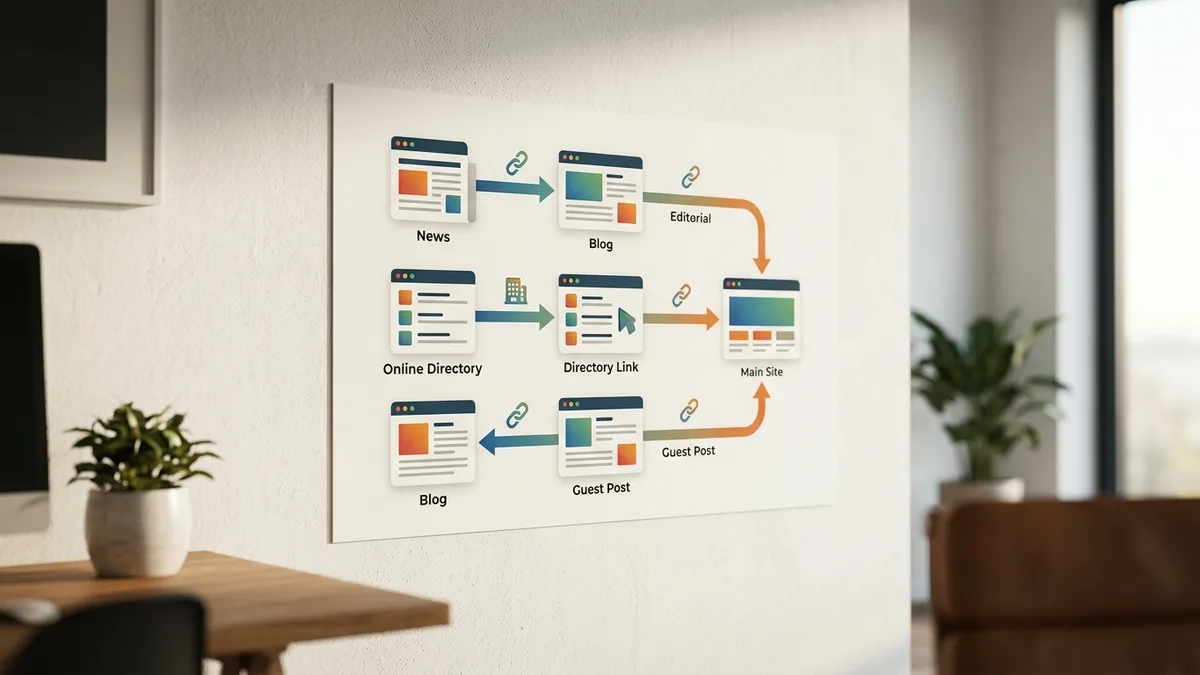
Editorial backlinks are earned naturally when a journalist, blogger, or content creator cites your content because it is genuinely useful. According to the 2026 WebFX Backlink Study analyzing 1,462 domains across 15 industries, editorial links account for 92.2% of backlinks pointing to top-ranking pages. This is the gold standard, and it is the category you should target as a vacation rental website owner.
Guest post backlinks are links you earn by writing content for another website in exchange for a byline and a link back to your site. Done correctly, with genuinely useful content published on relevant sites, guest posting remains a legitimate strategy. Done incorrectly, by paying for placements on irrelevant networks, it becomes a link scheme that Google actively penalizes.
Directory and resource page backlinks represent the remaining approximately 8% of backlinks pointing to page-one sites, per the same WebFX study. Local business directories, tourism board resource pages, and destination marketing organization websites are realistic targets for STR operators. The volume of links from these sources will not move your rankings dramatically on its own, but they build a natural, diverse profile that supports the editorial links you earn through content.
Is SEO Dead or Evolving in 2026?
SEO is not dead in 2026; it has fundamentally shifted toward content quality, topical authority, and AI search optimization. The days of ranking through keyword stuffing and manipulative link schemes are genuinely over. But the fundamental principle behind backlinks, that credible third-party endorsements signal trustworthiness to search engines, has not changed. What has changed is where those endorsements get surfaced and how AI systems use them.
Google's AI Overviews and AI Mode, now prominent features in 2026 search results, pull heavily from pages that already carry strong backlink profiles. Research analyzing 1,000 domains confirms that high-quality backlinks improve visibility specifically in AI-generated search summaries. The link between a strong backlink profile and AI search prominence is direct and documented.
For vacation rental operators, this creates an important strategic reality. When a traveler asks Google's AI Overview or an AI assistant which vacation rental in your destination area is worth booking, the answer that surfaces will come from websites with both strong content and credible backlinks. Operators who invested in content marketing and earned those links over the past several years are now seeing compounding returns in 2026. Those who delayed are starting from behind.
SEO has also evolved in its relationship with AI search optimization for STR operators. Traditional Google search optimization and Generative Engine Optimization (GEO) now overlap significantly. Content that earns backlinks tends to be exactly the kind of structured, authoritative, specific content that AI systems prefer to cite. You are not optimizing for two separate channels; you are building one asset that serves both.
We have watched this play out repeatedly with operators using inkSTR's content pipeline. The properties that commit to publishing consistent, well-researched blog content, local area guides, destination comparisons, and travel planning resources, gradually accumulate the editorial backlinks that lift their domain authority, which then feeds their AI search visibility. The mechanism is slower than paid ads, but a ranking article can drive organic traffic for 2 to 5 years. That compounding return is something paid placement can never replicate.
What Are the 3 C's of SEO?
The 3 C's of SEO refer to Content, Code, and Credibility: the three pillars that determine whether a page ranks in search results. Backlinks are the primary driver of the Credibility pillar, which is why understanding what a backlink in SEO means is inseparable from understanding SEO holistically.
Content: What Your Page Says
Content covers everything you publish: the words on your page, how well they match search intent, the depth of coverage, and whether the information is genuinely useful to the person searching. For STR websites, content means destination guides, property descriptions, local attraction roundups, travel planning advice, and any other material that answers questions your potential guests are actively searching for.
Content quality is a prerequisite for earning backlinks. Nobody links to a thin, generic page. The editorial backlinks that carry the most SEO weight are earned by content that is specific, well-researched, and genuinely more useful than anything else ranking for that topic. This is why inkSTR's AI Content Writer generates articles at 2,500 to 3,500 words by default: surface-level content simply does not earn the attention needed to attract third-party links.
Code: How Your Page Is Built
The Code pillar covers technical SEO: site speed, mobile responsiveness, proper HTML structure, schema markup, and crawlability. A technically sound website ensures that Google can find, index, and understand your pages. Backlinks pointing to a technically broken site accomplish far less than the same links pointing to a fast, well-structured one.
Credibility: Who Vouches for Your Page
Credibility is where backlinks live. This pillar measures how many authoritative external websites link to yours, how relevant those sites are to your topic, and whether your overall backlink profile looks natural or manufactured. The 2026 WebFX study found that page-one sites across 15 industries maintain a median of 907 referring domains. Vacation rental websites competing in popular destinations need a serious, sustained link-building strategy to build that kind of profile over time.
The three C's work together, not independently. Strong content earns backlinks. Clean code ensures those backlinks pass their full value. And a credible backlink profile amplifies the authority of every page on your site. Ignoring any one pillar limits the impact of the other two.
How Do I Get Backlinks for SEO?
Getting backlinks for SEO requires publishing content that other websites genuinely want to reference, then making that content visible to the right publishers, journalists, and bloggers. Backlinks cannot be bought sustainably, and they cannot be rushed, but they can be earned systematically through a content-first approach that most vacation rental operators are not yet taking.
Publish Content Worth Linking To
The most reliable way to earn editorial backlinks is to create the most useful resource on a specific topic in your destination market. For STR operators, this means detailed local guides that cover things to do, seasonal travel planning, neighborhood comparisons, or event calendars. When a local tourism blog, a destination marketing organization, or a travel writer references your market, they look for the best local resource to cite. If your guide is it, you earn the link.
Writing one quality blog post manually takes 3 to 5 hours of research and writing. Maintaining the volume needed to build topical authority across an entire destination, covering dozens of relevant subtopics, is simply not feasible for most operators managing properties full-time. This is the exact problem inkSTR was designed to solve. Our Content Calendar keeps your publishing schedule consistent, and our AI content generation handles the research and writing so you can maintain the output needed for a real link-building strategy.
Use Broken Link Building
Broken link building involves finding pages on relevant websites that link to content which no longer exists, then reaching out to suggest your page as a replacement. Publishers actively want to fix broken links because they create a poor user experience. If you have published a relevant, high-quality resource, this approach gives you a specific, genuinely helpful reason to contact them.
The process requires an SEO tool to identify broken links on target sites, a relevant piece of content on your own site to suggest as the replacement, and a brief, direct outreach email. The conversion rate on good broken link outreach is meaningfully higher than cold link requests, precisely because you are solving a problem the publisher already has.
Get Listed in Legitimate Directories and Resource Pages
Local tourism boards, destination marketing organizations, and regional travel blogs often maintain resource pages listing accommodation options or local guides. Getting your vacation rental website listed on these pages earns backlinks from highly relevant sources, the kind that carry real contextual weight in Google's assessment of your site's authority.
These listings are not glamorous, and they will not single-handedly move your rankings. But they contribute to the natural, diverse backlink profile that makes your domain look credible rather than manufactured. Combined with editorial links earned through content, directory and resource page links fill out a realistic backlink strategy for an STR operator without a dedicated PR team.
Pursue Digital PR and Media Mentions
When a travel journalist, local news outlet, or lifestyle publication covers your destination, your property, or a topic you have published about, a well-timed outreach email can turn that coverage into a backlink. This is a longer game, but the links earned through media mentions are often among the highest-authority links available to a vacation rental operator.
Publishing data-driven content, surveys, or local market insights gives journalists a specific reason to cite your site. Consider an annual post covering local event calendars, accommodation pricing trends in your area, or seasonal travel demand patterns. Content that contains original data or perspective gets referenced. Generic travel writing does not.

How Do You Check Your Backlinks?
Checking your backlinks means accessing a report of every external website currently linking to your pages, then evaluating the quality, relevance, and growth trend of that profile. Google Search Console provides a free starting point; dedicated SEO tools offer deeper analysis including domain authority scores, anchor text distribution, and identification of potentially harmful links.
Google Search Console: Your Free Starting Point
Google Search Console's Links report shows you which external domains link to your site most frequently, which of your pages earn the most backlinks, and what anchor text external sites use when linking to you. This data comes directly from Google's index, making it the most authoritative source available at no cost.
To access it, log into Google Search Console, select your property, and navigate to the Links section in the left sidebar. The External Links report shows your top linked pages, your top linking sites, and your top linking text. For a vacation rental website early in its SEO journey, this report often reveals that most inbound links come from a handful of directory listings, which immediately identifies the gap that content marketing needs to fill.
inkSTR integrates directly with Google Search Console, pulling performance data into your content dashboard so you can see which published articles are already earning traffic and which topics need more supporting content to build authority. We built that integration because the feedback loop between what ranks, what earns links, and what to publish next is the core of a smart content strategy.
Third-Party SEO Tools for Deeper Analysis
For more detailed backlink analysis, tools like Moz and SEMRush provide comprehensive backlink databases with quality scoring. These platforms assign authority metrics to both linking domains and individual pages, letting you distinguish between a link from a high-traffic regional tourism board and a link from a low-quality, newly created directory.
Key metrics to review when auditing your backlinks include: the domain authority or authority score of the linking site, the relevance of the linking page's topic to your content, the anchor text used, whether the link is dofollow or nofollow, and whether the linking page appears in Google's index at all. A link from a deindexed or penalized site contributes nothing and may actively harm your profile.
How to Identify and Disavow Toxic Backlinks
Toxic backlinks are links from sites that Google considers spammy, manipulative, or in violation of its link spam policies. These include links from private blog networks, mass-produced directory submissions, sites with no real content or traffic, and links created through automated programs. If you have never done any link building, you likely have few toxic links. But if your site has existed for several years or if a previous manager used aggressive tactics, a toxic link audit is worth running.
The criteria for classifying a link as toxic include: the linking domain has extremely low or zero organic traffic, the site exists purely to sell links, the site's content is auto-generated or unreadable, the link is buried in a hidden section of the page, or the anchor text is over-optimized with exact-match commercial phrases across dozens of similar domains.
To disavow toxic links, compile a list of the harmful domains or specific URLs in a plain text file formatted according to Google's specifications, then upload it through the Disavow Links tool in Google Search Console. Google will then ignore those links when calculating your site's authority. Use this tool cautiously: disavowing legitimate links by mistake can reduce your rankings. Only disavow links you are confident are harmful.
Ready to automate your content marketing?
inkSTR handles keyword research, content strategy, article writing, and publishing, all on autopilot.
What Makes a Backlink Genuinely Valuable for Your STR Website?
A valuable backlink for a short-term rental website comes from a topically relevant, high-authority domain, is placed within the main body of the content rather than in a footer or sidebar, uses natural anchor text, and was earned editorially rather than purchased or exchanged. All five criteria matter, and a link that fails on two or more of them provides minimal ranking benefit.
Relevance Comes First
A link from a travel blog covering your destination is worth significantly more than a link from a general business directory. Google's algorithm assesses the topical relationship between the linking page and the page being linked to. For STR operators, the most valuable linking sources include local tourism websites, destination travel guides, regional lifestyle publications, food and hospitality blogs covering your area, and travel planning resources. Links from completely unrelated industries, even high-authority ones, carry less contextual weight.
Placement Affects Link Equity
Where on the page a backlink appears affects how much value it passes. Google's reasonable surfer model patent outlines how the search engine assesses the likelihood of a link being clicked: links embedded within the main body of an article, surrounded by relevant text, signal genuine editorial value. Links in footers, blogrolls, sidebars, and comment sections carry less weight because they are less likely to represent a genuine editorial endorsement.
This is why press coverage and editorial mentions from real journalists drive better results than bulk directory submissions. The journalist linking to your local area guide within the body of their travel article is making a genuine recommendation, and Google's algorithm is built to recognize that distinction.
Anchor Text: Descriptive, Not Over-Optimized
Anchor text is the clickable text used in the hyperlink. Descriptive anchor text like "the best weekend getaway cabins near Asheville" or "a detailed guide to fall foliage hiking trails" signals context to Google about what the linked page covers. Exact-match commercial anchor text like "cheap Asheville vacation rental" repeated across dozens of links is a clear manipulation signal and can trigger a manual penalty.
Natural backlink profiles contain a mix of anchor text types: branded anchors (your site or property name), generic anchors ("click here," "this guide"), and descriptive anchors. If your backlink profile shows an unnaturally high concentration of exact-match commercial anchors, that alone can suppress your rankings.
Backlinks vs. Internal Links: What Is the Difference and Why Do Both Matter?
Backlinks are links from external websites pointing to your pages; internal links are links between pages on your own website. Both types influence how search engines understand and rank your content, but they do so through different mechanisms and require different strategies. Many STR operators invest energy in one while ignoring the other.
Backlinks build your site's overall domain authority by accumulating external trust signals over time. Internal links, by contrast, distribute that authority across your site's pages and tell Google which pages you consider most important. A vacation rental website that earns 50 backlinks to its homepage but has no internal links pointing to individual property pages, blog articles, or booking pages is leaving most of that authority stranded at the top of the funnel.
The two systems work together. When a high-authority external page links to one of your blog articles, that article gains authority. If that article then links internally to your direct booking page or to a related destination guide on your site, it passes a share of that authority downstream. This chain, from external backlink to internal link to conversion page, is the actual mechanism by which content marketing drives direct bookings.
We track this connection closely at inkSTR. Our platform includes an internal link management system that suggests relevant cross-links as your content library grows, specifically because the combination of external authority and smart internal linking is what turns a decent content strategy into a genuine booking engine. You can see how this fits into the broader workflow at How inkSTR Works.
For a deeper look at how this plays out specifically for STR websites, our guide on ranking on Google for STR operators covers the interplay between content, internal structure, and external authority in practical detail.
Understanding Backlink Metrics: Domain Authority, Authority Score, and Domain Rating
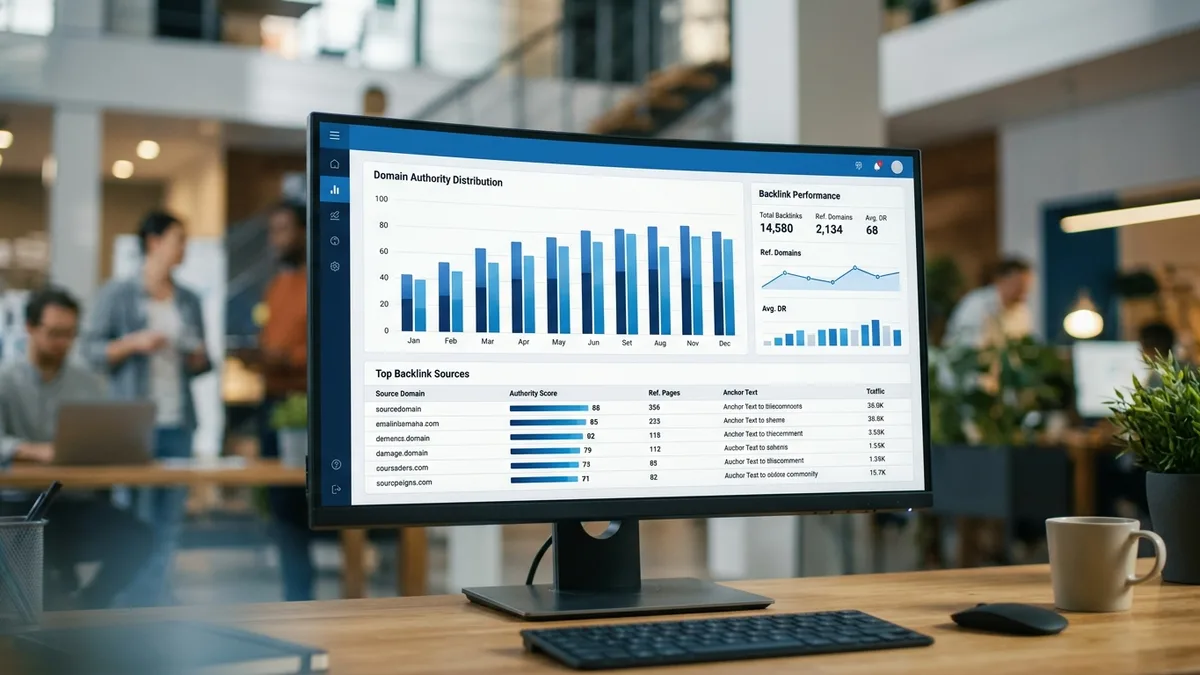
Backlink quality is measured by several proprietary metrics developed by major SEO platforms, each calculated slightly differently. Domain Authority, Authority Score, and Domain Rating are the three you will encounter most often. None of them are official Google metrics, but all three correlate meaningfully with actual search ranking performance and serve as practical proxies for evaluating link quality.
| Metric | Developed By | Scale | Primary Inputs |
|---|---|---|---|
| Domain Authority (DA) | Moz | 1-100 | Linking root domains, MozRank, MozTrust |
| Authority Score (AS) | Semrush | 0-100 | Link power, organic traffic, natural profile |
| Domain Rating (DR) | Ahrefs | 0-100 | Number and quality of unique referring domains |
All three metrics measure related but slightly different aspects of a domain's backlink strength. Moz's Domain Authority emphasizes the quality and quantity of linking root domains. Semrush's Authority Score adds organic traffic as a component, reflecting the idea that a site with real visitors is more trustworthy than one that exists purely to accumulate links. Domain Rating focuses narrowly on the referring domain profile.
For practical link evaluation, the score itself matters less than the trend and the context. A link from a DA 45 regional tourism blog in your specific destination market will likely benefit your vacation rental site more than a link from a DA 60 generic business directory with no topical relevance. Use these metrics as one signal among several, not as the single deciding factor for whether to pursue a link opportunity.
The most important thing to know about all three metrics: they are snapshots, not permanent scores. They update as your backlink profile grows. Tracking your own score over time through a tool like Moz gives you a practical measure of whether your content and link-building efforts are compounding correctly.
How Long Do Backlinks Take to Impact Your Rankings?
New backlinks typically take between 2 and 12 weeks to visibly affect your search rankings, depending on how quickly Google crawls and processes the linking page, the authority of the linking domain, and how competitive the target keyword is. This timeline is one of the most common sources of frustration for STR operators new to SEO, and it is worth being direct about: backlinks are a long-term investment, not a short-term traffic lever.
Several factors influence how quickly a new backlink moves the needle. A link from a high-traffic, frequently crawled domain like a major regional tourism site will be indexed by Google within days. A link from a smaller blog that Google crawls infrequently may take weeks to appear in your backlink profile at all. The actual ranking impact, once the link is processed, depends on how competitive the keyword is and how many total referring domains your site already has relative to competitors.
The realistic timeline for a vacation rental website building its backlink profile from scratch looks something like this: consistent content publishing for the first three months establishes topical authority signals; the first meaningful editorial backlinks from destination-relevant sites typically appear around months four through six; measurable ranking improvements for mid-competition local keywords begin showing up between months six and twelve. Highly competitive terms in popular destinations like Nashville, Scottsdale, or the Florida Gulf Coast can take longer.
This timeline is precisely why operators who start content marketing early see compounding advantages. A ranking blog article can drive organic search traffic for 2 to 5 years, and each year of accumulated backlinks makes new content easier to rank. The operators we work with at inkSTR who commit to the full content calendar approach, using our Auto-Publishing feature to maintain consistency without manual effort, are the ones who report meaningful ranking improvements within that first year window.
What Link-Building Tactics Does Google Penalize?
Google actively penalizes link-building tactics that attempt to manipulate PageRank artificially, and the penalties range from ranking suppression to complete removal from search results. Any strategy built around purchasing links, participating in link exchanges, or automating link creation at scale violates Google's Link Spam Policies and puts your vacation rental website's organic traffic at serious risk.
Specific practices that trigger manual penalties or algorithmic suppression include: paying money, goods, or services in exchange for follow links; participating in large-scale link exchanges where sites agree to link to each other for SEO gain; using automated programs to create backlinks across thousands of low-quality pages; submitting to low-quality directories that exist purely to sell links; and creating thin content on multiple websites specifically to generate links back to your main site.
The pattern Google is looking for is unnatural link velocity combined with unnatural anchor text distribution. If your site goes from 10 referring domains to 200 referring domains in a single month, and most of those links use identical exact-match anchor text, that profile looks manufactured. The 2026 WebFX benchmark of 48 new referring domains per month as an industry average gives you a sense of what natural link growth actually looks like at scale. For an individual STR website, organic growth is considerably slower, and that is expected.
The safer path is always content-first link building: publish resources that attract links naturally, reach out to relevant publishers with genuine value to offer, and build a diverse profile over time. Shortcuts in link building do not save time. They create cleanup work that takes far longer than the shortcuts saved.
Frequently Asked Questions About Backlinks in SEO
What is the difference between a backlink and an internal link?
A backlink is a link from an external website pointing to a page on your site, while an internal link connects two pages within the same website. Backlinks build your domain's overall authority by accumulating external trust signals. Internal links distribute that authority across your pages and guide search engines toward your most important content. Both matter for STR website SEO, and the two systems work best when used together strategically.
Do nofollow backlinks still help with SEO in 2026?
Yes, nofollow backlinks can still influence SEO in 2026, though indirectly. Google treats the nofollow attribute as a hint rather than a hard directive and may still factor these links into ranking decisions. Research specifically on AI search visibility confirms that nofollow links have nearly the same impact on AI Overview prominence as dofollow links. A diverse backlink profile that includes nofollow links from reputable sources looks more natural than one composed entirely of dofollow links.
How many backlinks does a vacation rental website need to rank on page one?
The answer depends heavily on your destination and target keywords. The 2026 WebFX Backlink Study found that page-one ranking websites across 15 industries have a median of 907 referring domains. Individual STR websites in local markets typically need far fewer to rank for specific destination queries, because local search competition is lower than broad national terms. The quality and relevance of your referring domains matter more than raw volume, and a dozen links from credible travel and destination sources will outperform hundreds of links from generic directories.
Can I buy backlinks for my vacation rental website?
Buying backlinks violates Google's Link Spam Policies and risks significant ranking penalties including complete removal from search results. The short-term gain from purchased links is rarely worth the long-term risk. Google's ability to detect unnatural link patterns has improved substantially, particularly for sudden link velocity spikes and over-optimized anchor text distribution. Building backlinks through consistent content creation and genuine outreach takes longer but produces durable ranking improvements that compound over years.
How do I start building backlinks if my vacation rental website is brand new?
Start by publishing specific, genuinely useful content: detailed local area guides, destination travel resources, and seasonal itineraries that go deeper than anything already ranking for those topics. Submit your site to legitimate local directories, your destination's tourism board, and any regional hospitality resource pages. Reach out to local travel bloggers, destination marketing organizations, and regional lifestyle publications with a specific resource you have published that would benefit their readers. Consistency over six to twelve months is more important than any single tactic.
What tools should I use to check and monitor my backlinks?
Google Search Console provides free backlink data directly from Google's index and is the best starting point for any STR operator. For deeper analysis including domain authority scoring, anchor text distribution, and toxic link identification, tools like Moz and SEMRush offer comprehensive backlink databases. Running a backlink audit every quarter is a reasonable cadence for most vacation rental websites: frequent enough to catch problems early, infrequent enough not to distract from content creation.
Does publishing more blog content actually help earn backlinks?
Yes, and it is the most reliable link-building strategy available to individual STR operators without a dedicated PR budget. Editorial backlinks account for 92.2% of links pointing to page-one sites, per the 2026 WebFX study, and editorial links are earned by content that other publishers find worth referencing. A well-researched local area guide, a destination data post, or a travel planning resource that outperforms everything else on that topic will attract links organically over time. Writing one quality blog post manually takes 3 to 5 hours; inkSTR's AI Content Writer generates that same post in minutes, making the volume needed for a real link-building strategy actually achievable.
How do backlinks affect my vacation rental website's ability to get direct bookings?
Backlinks improve your search rankings, which increases organic traffic, which creates more opportunities for direct bookings. A single direct vacation rental booking is typically worth $1,000 to $4,000 in revenue, and every direct booking keeps the full amount rather than surrendering the 17 to 19% in combined Airbnb host and guest fees that OTA bookings cost. Higher search rankings reduce your dependence on platforms that charge those fees. Content that earns backlinks and ranks organically becomes a long-term direct booking asset that appreciates in value over time rather than disappearing when your ad budget runs out.
The Bottom Line: Backlinks Are the Foundation Your STR Content Strategy Earns Over Time
Understanding what a backlink in SEO means is the starting point. Acting on that understanding consistently is what actually moves rankings. Backlinks are third-party trust signals that Google uses to determine which pages deserve to rank, and for vacation rental websites competing in crowded destination markets in 2026, a credible backlink profile is increasingly the difference between driving direct bookings organically and paying platform fees on every reservation indefinitely.
The practical path is clear: publish specific, high-quality content that other sites in your destination ecosystem want to reference. Use Google Search Console and tools like Moz to monitor your backlink profile quarterly. Build a natural, diverse profile over time through editorial content, legitimate directory listings, and genuine publisher outreach. Avoid any tactic that attempts to manufacture links artificially. And understand that the timeline is months, not days, but that a well-earned backlink profile compounds in value for years.
For STR operators who want to run this strategy without spending 3 to 5 hours per blog post, the answer is to automate the content production while keeping the strategy sharp. A ranking article can drive organic traffic for 2 to 5 years. The question is whether you publish one this week or six months from now.
To see how other operators are approaching this, our guide on direct booking SEO and local signals in 2026 covers the complete framework for turning content into bookings, with backlinks as a central pillar of that system.

If you are ready to build the content library that earns backlinks and drives direct bookings, inkSTR generates, schedules, and publishes SEO-optimized articles automatically so your site keeps growing without consuming your week. Start your free trial at inkSTR.co and publish your first backlink-worthy post this week.
Enjoyed this article? Share it:
Get more of inkSTR in Google Search
Add inkstr.co as a preferred source and our articles show up more in Top Stories, AI Overviews, and AI Mode — with a “Preferred” badge.
Get more guides like this
New SEO and AI-search guides, straight to your inbox. No spam, unsubscribe anytime.