How to Improve Airbnb Listing SEO: 12 Ranking Fixes

Improving Airbnb listing SEO means optimizing the specific signals Airbnb's search algorithm weighs: title keywords, photo quality, response rate, acceptance rate, pricing competitiveness, review scores, and calendar availability. There is no single trick. Ranking higher requires fixing all of these at once, then keeping them fresh as Airbnb updates its ranking model.
Key Takeaways
- Airbnb's search algorithm ranks listings using a mix of guest behavior signals (response rate, acceptance rate, review scores) and listing quality signals (photos, title, description completeness), not a single "SEO score."
- According to Airbnb's own ranking factors documentation, host responsiveness and guest satisfaction carry real weight alongside pricing and availability.
- Industry research from BuildUp Bookings found Airbnb appears on page one of Google for 79% of top vacation rental markets, but lands in the top 3 organic results in only 5% of those markets, meaning your own website content still has room to outrank the platform itself.
- Data cited by Maverick Strategies shows listings with a 100% complete profile can receive up to 18% more bookings than incomplete ones, based on Booking.com Partner Hub analysis of listing completeness.
- Paid "view boosting" services that promise fast ranking jumps typically violate platform terms of service and rarely produce sustainable results, so they are worth avoiding entirely.
- inkSTR helps you extend Airbnb visibility with owned-channel content, using its Keyword Research and AI Content Writer tools to build a blog that captures the direct-booking traffic your Airbnb listing alone can't reach.
If your Airbnb listing sits on page three of search results while a nearly identical property two blocks away sits at the top, the difference usually isn't luck. It's a stack of small, fixable signals that Airbnb's algorithm reads every time a guest searches your market. In 2026, with more inventory competing for the same dates in most markets, those signals matter more than they did even two years ago.
At inkSTR, we work with hosts and property managers who've already optimized their titles and photos and still can't figure out why bookings are flat. Usually it's because they treated Airbnb SEO as a one-time task instead of an ongoing process tied to response times, pricing, and content freshness. This guide walks through the twelve fixes that move the needle, in the order we'd tackle them if we were auditing your listing today.
We'll also cover something most Airbnb SEO guides skip entirely: the fact that your listing lives inside a platform you don't control, and building a second channel, your own website, is the only way to stop depending on Airbnb's algorithm for every booking you get.
1. Why Isn't Your Airbnb Listing Ranking on Page One?
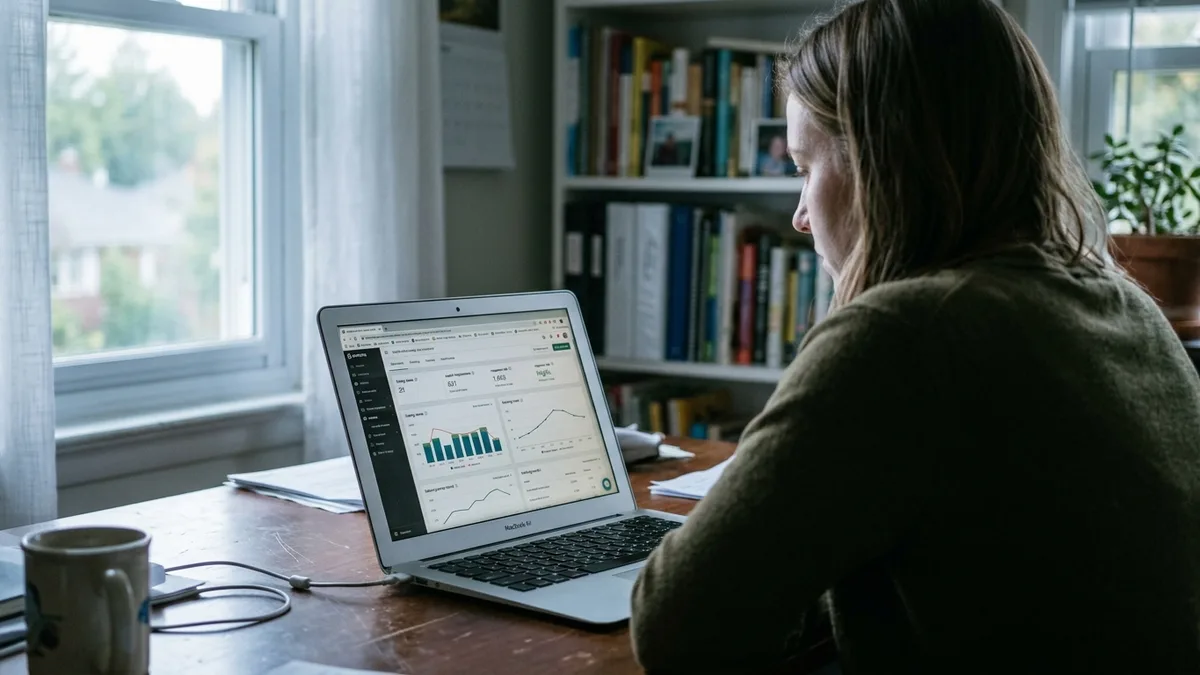
Your Airbnb listing likely isn't ranking on page one because it's underperforming on one or more of Airbnb's core ranking signals: response rate, acceptance rate, review score, price competitiveness, or booking conversion rate relative to views. Airbnb's search algorithm, according to its own published ranking factors, weighs guest satisfaction and host reliability alongside listing completeness.
Most hosts assume ranking is about keywords alone, the way Google SEO works. It isn't. Airbnb's model leans heavily on behavioral data: how fast you respond to inquiries, whether you accept or decline requests, and whether guests who view your listing actually book it. A beautifully written description with a 40% acceptance rate will still rank behind a plainer listing with a 95% acceptance rate and fast replies.
The painful part is diagnosing which signal is dragging you down. Without dashboard access to Airbnb's internal weighting, hosts often guess, rewrite the description for the third time, and see no movement because the real problem was a three-day response lag from the previous month.
This is exactly the gap we built inkSTR's Keyword Research tool to work alongside, not replace. Airbnb's internal algorithm governs your in-app ranking, but your own site's Google ranking is something you fully control. We help you build that second channel so a slow month inside Airbnb's black box doesn't sink your entire booking pipeline.
2. What Makes an Airbnb Listing Title Actually Work for SEO?
An effective Airbnb listing title front-loads the strongest keyword and selling point in the first 30 to 40 characters, since mobile search results truncate longer titles. Titles under 50 characters display cleanly across devices and avoid getting cut off mid-word on a phone screen, which is where most Airbnb searches happen.
Generic titles like "Cozy Downtown Apartment" waste every character on words guests already assume. Specific titles, for example "Walkable Loft, Rooftop Hot Tub, Fast WiFi," tell a guest scanning a grid of thumbnails exactly why yours is different in the space they'll actually read.
Rewriting a title once and forgetting about it is common, and it's a mistake. Seasonal events, local festivals, or new amenities (a hot tub install, a Tesla charger) are worth reflecting in the title when they're genuinely relevant, since freshness itself is a signal Airbnb's algorithm has increasingly rewarded as the platform pushes hosts toward active management.
We see this pattern constantly in the property portfolios we work with: a title written once in 2023 that never accounted for a new amenity added in 2026. inkSTR's Keyword Research feature identifies which specific terms guests in your market actually search for, so your title targets real demand instead of a guess.
3. How Much Do Photos Actually Affect Airbnb Search Ranking?
Photo quality directly affects Airbnb search ranking because Airbnb's algorithm factors in click-through rate and booking conversion, both of which are driven overwhelmingly by your cover photo and gallery. A weak cover photo means fewer clicks from the search grid, and fewer clicks signal low relevance to Airbnb's ranking model regardless of how good your description is.
Your cover photo needs to win in a thumbnail roughly the size of a postage stamp. That means bright, wide-angle, uncluttered shots beat moody or artistic ones almost every time in the actual search results grid, even if the moody shot looks better full-screen.
Hosts who shoot their own photos on a phone in dim lighting are competing against listings with professional wide-angle shots taken at golden hour. The gap in click-through rate compounds daily. Every day with a weak cover photo is lost search visibility you can't get back retroactively.
This is a purely visual, purely platform-side fix, not something inkSTR's content tools touch directly, and we'll say that plainly. Where inkSTR does help is on your own website: once a guest clicks through from Google to your blog, AI Content Writer-generated pages paired with strong property photography convert that visitor into a direct inquiry instead of routing them back to an OTA listing.
4. What Should Your Airbnb Listing Description Actually Include?
A strong Airbnb listing description opens with the single strongest selling point in the first two sentences, then covers amenities guests filter by: kitchen access, high-speed WiFi, pool or hot tub, free parking, pet-friendly policy, self check-in, and washer/dryer. Guests scan, they rarely read every paragraph, so the order of information matters as much as the content itself.
Beyond amenities, description quality means specificity. "Walk to restaurants" tells a guest nothing. Naming an actual nearby park, a specific walkable district, or a known local landmark using Google Maps to verify accuracy gives the guest a concrete reason to choose your listing over an identical one three streets away.
Writing this well for one listing takes time. Writing it well across a 20-property portfolio, each with different amenities, different neighborhoods, and different guest types, is where most property managers we talk to get stuck. They either copy-paste a template across every unit (which reads as generic and converts poorly) or spend hours customizing each one manually.
That's the exact problem inkSTR's AI Content Writer was built to solve for your website content, and the same research process applies to sharpening your Airbnb description: understanding what guests in your specific market actually search for and filter by, then writing to that intent instead of a generic template.
5. Does Response Rate Really Affect Airbnb SEO Ranking?
Yes. Airbnb tracks average response time as a direct ranking signal, and hosts who reply within roughly one hour are rewarded with better search placement compared to hosts who take a day or more. Airbnb's algorithm treats slow responses as a proxy for poor guest experience, whether or not that's actually true in your case.
The math here is unforgiving. A host managing one property might reasonably reply within minutes. A host or property manager juggling ten inboxes across multiple channels, plus cleaning schedules, plus maintenance requests, often lets messages sit for hours without meaning to.
Every slow reply doesn't just cost that one potential booking. It drags down your rolling response-rate average, which then suppresses your ranking for every future search, even searches from guests who message you promptly.
We can't fix your Airbnb inbox response time directly, that's a guest communication workflow issue, not a content problem. But we'd point out that operators managing this well typically have systems (auto-replies, dedicated staff rotation, or a co-host) in place specifically because they understand how much ranking depends on it. If you're scaling a portfolio and your content strategy is also suffering because of the same time crunch, that's where inkSTR's Content Calendar takes one entire workload, blog publishing, off your plate so your team can focus on guest response times instead.
6. Should You Enable Instant Book to Improve Airbnb SEO?
Enabling Instant Book generally improves Airbnb search ranking because it removes friction from the booking path, and Airbnb's algorithm favors listings that convert search views into completed bookings quickly. Industry data suggests hosts without Instant Book enabled can lose a meaningful share, estimated at 30 to 50 percent, of potential bookings simply because guests move on rather than wait for manual approval.
Guests searching Airbnb are often comparing five or six listings at once. If yours requires a request-to-book approval and a competing listing offers instant confirmation, the guest frequently books the instant option before you've even seen the request notification.
Hosts avoid Instant Book because they want to screen guests manually, which is a reasonable instinct. But Airbnb's guest requirements settings (ID verification, positive review history, no prior cancellations) let you screen without sacrificing the ranking benefit, so the manual-approval workaround is rarely necessary anymore.
This is a platform settings fix, not a content one, so we'll be direct: check your Instant Book settings this week if you haven't already. It's one of the fastest, lowest-effort ranking improvements available, and it costs you nothing to test for a billing cycle.
7. How Does Pricing Strategy Influence Airbnb Search Visibility?
Pricing competitiveness is a direct input into Airbnb's search ranking algorithm, meaning a listing priced significantly above comparable nearby properties will rank lower even with excellent reviews and photos. Airbnb's model appears to weigh whether your price reflects fair value relative to similar listings in the same search radius and date range.
This doesn't mean racing to the bottom on price. It means your rate needs to reflect what guests are actually seeing across comparable listings for the same dates, which shifts constantly with seasonality, local events, and competitor calendar changes.
Static pricing, setting one nightly rate in January and leaving it unchanged through December, is one of the most common reasons a previously well-ranked listing quietly drops out of top search positions. The market moved and the price didn't.
Dynamic pricing tools exist specifically to solve this, adjusting your rate daily based on demand signals. We don't build pricing software at inkSTR, our focus is content and SEO, but we'd tell any operator managing multiple units that pricing and content marketing solve two different halves of the same problem: pricing wins the in-platform algorithm, while a strong direct booking SEO strategy on your own site reduces how dependent your revenue is on winning that algorithm at all.
8. Do Reviews Actually Impact Airbnb Listing SEO?
Review score and review volume are core ranking inputs for Airbnb, and listings with consistently high ratings and a growing review count outrank comparable listings with fewer or lower reviews. Airbnb's algorithm treats review data as the clearest available proxy for actual guest satisfaction, since it comes directly from people who stayed.
Getting reviews at all is the first hurdle. Many satisfied guests simply forget to leave one unless prompted, not because they had a bad experience but because checkout day is chaotic and reviewing an Airbnb stay isn't top of mind.
A polite, well-timed request (sent the morning after checkout, not immediately at checkout) meaningfully increases review submission rates without coming across as pushy. Most guests are willing; they just need the reminder while the experience is still fresh.
Beyond volume, the content of reviews matters for a second reason: guests reading your listing page scan reviews for specific proof points, like accurate photos, an easy check-in, or a responsive host. If you're also running a blog or local guide on your own website, mentioning what past guests loved (with permission) reinforces the same trust signals outside Airbnb entirely, which is a tactic covered in more depth in our piece on why your vacation rental website is not ranking on Google.
Ready to automate your content marketing?
inkSTR handles keyword research, content strategy, article writing, and publishing, all on autopilot.
9. What Is the Airbnb Categories Feature and Does It Affect Ranking?
Airbnb's Categories feature groups listings into themed collections (like OMG!, Amazing views, or Design) based on standout attributes the algorithm detects automatically from your photos and listing data. Getting placed in a relevant category can meaningfully expand your search visibility beyond standard location and date searches, since guests often browse categories directly.
Most hosts don't realize categories are algorithmically assigned rather than something you select manually. That means the photos and amenities you highlight indirectly influence which categories, if any, your listing qualifies for.
The "Guest Favorite" badge works similarly: it's awarded automatically to listings with consistently strong reviews and reliable guest experiences, and it functions as a visible trust signal directly in search results, separate from Superhost status.
Neither of these features responds to a quick fix. They're downstream results of doing everything else on this list well over a sustained period, which is exactly why treating Airbnb SEO as a one-time project instead of an ongoing habit is the most common mistake we see across the portfolios we review.
10. Should You Trust Paid Airbnb "View Boosting" Services?
Paid view-boosting services that promise a fixed number of additional listing views for a flat fee typically violate Airbnb's terms of service and carry real risk to your account standing. These services sell packages, sometimes advertising claims like "40% more bookings in 48 hours," without transparent evidence the boosted views translate into actual paying reservations.
The appeal is obvious: a guaranteed metric for a fixed price feels safer than the slow, compounding work of improving response rate and reviews organically. But artificially inflated view counts don't improve the underlying signals, acceptance rate, review score, response time, that actually drive Airbnb's ranking algorithm.
Worse, using third-party tools that manipulate platform metrics risks account suspension, which would erase your listing history, reviews, and Superhost status entirely. That's a catastrophic outcome to risk for a short-term view spike that may not even convert to bookings.
We'd recommend skipping these entirely and putting that same budget toward legitimate, compounding investments instead, professional photography, a pricing tool subscription, or content on your own website that builds search authority over years rather than days. A ranking blog article, unlike a paid view boost, can drive organic search traffic for two to five years once it takes hold in Google's index.
11. How Do You Track Airbnb SEO Performance Over Time?
Tracking Airbnb SEO performance means monitoring your listing's position for core search terms in your market over time, alongside your response rate, acceptance rate, and conversion rate from views to bookings, all metrics visible in your Airbnb host dashboard under Insights. Third-party listing optimization and analytics tools also exist if you want ranking position tracked more precisely across specific search queries.
Most hosts check their dashboard reactively, only when bookings drop, rather than reviewing it on a set schedule. By the time a ranking slide becomes obvious in your calendar, you may have already lost weeks of visibility you can't recover.
A monthly review habit, checking response time trends, price competitiveness alerts, and review velocity, catches problems while they're still small. It's a five-minute task that most operators skip simply because it isn't urgent until it suddenly is.
The same discipline applies to your website's Google performance, and it's a habit we build directly into how we think about content at inkSTR. Consistent publishing paired with actual performance tracking through Google Search Console integration shows you which topics are gaining traction, something we cover in detail in Ranking in AI Search: A Practical Guide for STR Operators in 2026.
12. Why Should You Build a Website Instead of Relying Only on Airbnb SEO?
You should build your own website because Airbnb's search algorithm is a system you don't control, can't fully see inside, and changes without notice, while a website you own accumulates search authority on Google that compounds over years and belongs to you regardless of what Airbnb does next. Research from BuildUp Bookings found Airbnb ranks on Google's first page in 79% of top vacation rental markets but reaches the top 3 organic spots in only 5% of them, meaning genuine ranking opportunity still exists outside the platform.
Every booking that comes through Airbnb also costs you a meaningful cut, combined host and guest fees typically run 17 to 19 percent of the total reservation value. A direct booking through your own site skips that fee entirely, and a single direct booking is often worth $1,000 to $4,000 in revenue depending on your property and season.
The obstacle almost every host cites is time. Writing one quality, well-researched blog post manually takes three to five hours, and hiring a freelance travel writer typically runs $300 to $700 per post. Multiply that across a content calendar needed to actually rank, and most hosts quietly give up before month two.
This is the exact gap inkSTR was built to close. Our AI Content Writer generates SEO-optimized articles automatically, our Content Calendar schedules them, and Auto-Publishing pushes them live on Wix or WordPress without you touching a keyboard, all starting at $99 a month. For a deeper walkthrough of the full process, see How to Rank Your Vacation Rental Website on Google.

What Data Backs Up These Airbnb SEO Priorities?
The table below summarizes the core ranking factors covered above, ranked by how directly they're documented in Airbnb's own published guidance versus inferred from listing behavior patterns. Use it as a quick audit checklist for your own listing.
| Ranking Factor | What It Measures | How Often to Review | Fix Difficulty |
|---|---|---|---|
| Response rate/time | Speed and consistency of guest message replies | Weekly | Low (process fix) |
| Acceptance rate | Share of booking requests you accept | Monthly | Low to medium |
| Cover photo and gallery | Click-through rate from search grid | Seasonally | Medium (photography cost) |
| Pricing competitiveness | Rate relative to comparable nearby listings | Weekly or dynamic tool | Medium (requires tool or manual tracking) |
| Review score and volume | Guest satisfaction proxy | Ongoing | Medium (requires guest experience quality) |
| Instant Book enabled | Booking friction and conversion speed | One-time setup | Low |
| Listing completeness | Amenities, description depth, title clarity | Quarterly refresh | Low to medium |
Notice how few of these are one-time fixes. Most require ongoing attention, which is precisely why hosts who treat Airbnb SEO as a project they "finished" in 2026 are often surprised to find their ranking has slipped by 2026 without a single obvious cause.
What Common Mistakes Hurt Airbnb Listing SEO the Most?
The most damaging Airbnb SEO mistakes are ignoring response time until it's already dragged down your ranking, letting your calendar go stale with outdated pricing, and treating your listing description as a document you write once and never revisit. Each of these compounds quietly over months before showing up as a visible booking drop.
A second, less obvious mistake: copying a generic description template across multiple properties in a portfolio. Airbnb's algorithm and guests both respond to specificity. A description that could describe any two-bedroom apartment in any city signals low effort, and low effort correlates with lower conversion rates in the data available to Airbnb's ranking model.
A third mistake, and one we see constantly at inkSTR: hosts who fix their Airbnb listing perfectly but never build a parallel website presence, leaving them fully exposed to every algorithm change Airbnb makes. When Airbnb adjusts its ranking weights, and it has done so multiple times over recent years, hosts with no secondary traffic source feel the full impact. Hosts with an established blog and direct booking funnel absorb the hit far better.
Avoiding all three requires consistency more than cleverness. That's the entire premise behind Vacation Rental Blog Topics That Actually Drive Bookings, a resource we'd point any host toward before their next content push.
Frequently Asked Questions
How long does it take to see results after improving Airbnb listing SEO?
Most hosts see measurable ranking movement within two to six weeks of fixing response rate, acceptance rate, and pricing competitiveness, since these are the fastest-updating signals in Airbnb's algorithm. Photo and description changes tend to show impact more gradually, often over one to two months, as click-through and conversion data accumulate.
What is the single most important Airbnb SEO ranking factor?
There isn't one dominant factor. Airbnb's algorithm blends response rate, acceptance rate, pricing competitiveness, and review score together, so a weakness in any one area can offset strength in another. Hosts who fix only their title or photos while ignoring response time typically see limited improvement.
Does Superhost status improve Airbnb search ranking?
Superhost status itself is a badge earned from meeting response, acceptance, review, and cancellation thresholds, so it's more a reflection of strong ranking signals than a separate ranking boost. Improving the underlying metrics that earn Superhost status will improve your ranking regardless of whether you hit the badge threshold.
Can AI write content that helps my vacation rental get found outside of Airbnb?
Yes. AI content tools built specifically for short-term rental terminology and traveler search intent, like inkSTR's AI Content Writer, can generate SEO-optimized blog articles that rank on Google independent of Airbnb's algorithm entirely. This gives you a booking channel Airbnb's ranking changes can't affect.
Should I use paid Airbnb view-boosting services to rank faster?
No. These services typically violate Airbnb's terms of service, risk account suspension, and don't address the actual behavioral signals, response rate, acceptance rate, review quality, that drive real ranking improvement. The safer, more durable path is fixing the underlying metrics directly.
How many blog articles do I need on my own site to start seeing SEO traction?
Most operators need a consistent publishing cadence over three to six months, generally 12 to 24 well-targeted articles, before seeing meaningful organic traffic gains, since Google needs time to index and trust a growing site. inkSTR's Content Calendar is built to maintain that cadence automatically so momentum doesn't stall.
Do I need existing SEO knowledge to improve my Airbnb listing and website ranking?
No. Airbnb's in-app ranking factors are documented in its own host help center and mostly require operational discipline, not technical SEO skill. For your website, tools like inkSTR handle keyword research and content generation automatically, which removes the need for prior SEO expertise entirely.
Conclusion: What's the Fastest Path to Better Airbnb Listing SEO?
Improving Airbnb listing SEO comes down to treating it as an ongoing operational habit rather than a one-time listing edit: fast responses, honest pricing relative to your market, complete and specific descriptions, and a steady flow of reviews. None of these fixes are complicated individually, but neglecting any one of them quietly caps your ranking regardless of how well you've optimized the rest.
The bigger shift for 2026 is recognizing that Airbnb's algorithm, however well you optimize for it, is a system you'll never fully control. Building a website with consistent, search-optimized content gives you a second channel that grows in value every year, independent of any single platform update.
If building and publishing that content yourself feels like a second full-time job stacked on top of managing guest messages and pricing, inkSTR generates, schedules, and publishes SEO-optimized articles automatically so your ranking effort doesn't stop the moment you get busy. Start a free trial with inkSTR and see your first article draft this week.
Content powered by inkSTR.co
Enjoyed this article? Share it:
Get more of inkSTR in Google Search
Add inkstr.co as a preferred source and our articles show up more in Top Stories, AI Overviews, and AI Mode — with a “Preferred” badge.
Get more guides like this
New SEO and AI-search guides, straight to your inbox. No spam, unsubscribe anytime.