14-Point Short-Term Rental SEO Checklist for 2026
A short-term rental SEO checklist works when it separates two different jobs: ranking your direct-booking website on Google, and ranking your listing inside Airbnb or VRBO's own search results. Most checklists blur these together. A real checklist audits both, item by item, with a clear owner and a review cadence.
Key Takeaways
- Google SEO and marketplace visibility (Airbnb, VRBO) run on completely different algorithms, so a single checklist item can help one and do nothing for the other.
- Property pages need 300-500 words of location-specific copy, a title tag under 60 characters, and structured data that includes required properties like containsPlace, image, latitude, and longitude.
- The global vacation rental market is projected to reach $84.02 billion in 2026, meaning more operators are competing for the same search terms every year.
- As of September 2026, articles published across inkSTR customer sites have generated more than 2,790,000 Google Search impressions in the trailing 90 days alone.
- Writing and maintaining this kind of checklist manually typically takes 3-5 hours per property page, and a freelance travel writer charges $300 to $700 per article to help.
- inkSTR's Keyword Research and AI Content Writer tools automate the research and writing steps of this checklist so you can run it across every property without hiring a writer.
Every operator we talk to has some version of the same checklist taped to a wall or buried in a spreadsheet: fix the title tags, write property descriptions, set up Google Business Profile. The problem isn't the list. It's that most of these lists were written by someone who has never run a vacation rental content pipeline across a dozen properties, so they read like generic SEO advice with "vacation rental" swapped in.
We built inkSTR because we watched operators spend entire weekends on tasks that should take twenty minutes, and still end up with pages that don't rank. This short-term rental SEO checklist is built from what we've seen work across hundreds of live property pages in 2026, including cabin brands and multi-market portfolios. It's organized as fifteen specific, checkable items, split clearly between what affects your Google rankings and what affects your marketplace visibility.
By the end, you'll have a system you can run every month, not just a list you read once and forget.
What Should You Include on a Short-Term Rental SEO Checklist?
A short-term rental SEO checklist should include on-page items, technical items like indexing and page speed, local visibility items like Google Business Profile, and conversion items like booking calendars and reviews. Most checklists stop at on-page basics and skip the technical and conversion layers entirely.
The gap shows up fast when you try to use a generic checklist. It tells you to "optimize your meta description" but doesn't say what happens if your property pages are blocked by robots.txt, which we see constantly on sites built with page builders that were never audited. It tells you to "build local content" but gives no process for avoiding duplicate neighborhood pages that cannibalize each other in search.
This is exactly the gap our fifteen-point structure below closes. Each item names what to check, why it matters, and which algorithm it affects. We also flag which items you can knock out in one sitting versus which need a recurring review, because SEO for a portfolio of properties is never a one-time project.
Why Do You Need to Separate Google SEO From Airbnb Ranking Signals?
Google SEO and Airbnb's internal search ranking are two separate systems that reward different behaviors, and treating them as one checklist item causes operators to waste effort on the wrong platform. Google rewards indexable, keyword-rich content on your own domain. Airbnb rewards response rate, booking acceptance, and guest reviews inside its own marketplace.
Most competing checklists don't make this distinction, so operators end up polishing their Airbnb listing description and wondering why their direct-booking website still doesn't show up in search. According to Airbnb's own documentation on ranking factors, marketplace visibility depends heavily on guest satisfaction signals and booking conversion within the app, not keyword density. Your direct-booking site runs on a different set of rules, closer to standard local business SEO with a hospitality layer on top.
We treat this separation as the foundation of every content strategy inkSTR builds. When a property manager tells us their site "gets traffic but no bookings," the fix almost always starts by auditing whether they've been optimizing for the wrong channel entirely. That's the exact problem our guide to ranking on Google was written to unpack in more depth.
In practical terms: items 1 through 10 below affect your own website's Google rankings. Items 11 through 13 affect marketplace visibility. Items 14 and 15 affect measurement across both. Know which bucket you're working in before you start checking boxes.
1. Audit Your Title Tags and Meta Descriptions
Your title tag is the single highest-leverage on-page element for click-through rate, and most vacation rental sites get it wrong by stuffing it with the property name and nothing else. Industry SEO research recommends keeping titles under roughly 60 characters, or around 512 pixels, to avoid truncation in search results.
The manual version of this task means opening every property page, checking pixel width with a browser tool, and rewriting each title to include destination and property type, plus a standout amenity, then repeating for every meta description at 120 to 155 characters. Across a 15-property portfolio, that's a full afternoon before you've written a single word of content.
You can preview exactly how your titles and descriptions will render in search using the Google SERP Simulator before publishing. inkSTR's AI Content Writer generates titles and descriptions within these length constraints automatically for every article and page it produces, so you're not manually counting characters across dozens of listings.
2. Write Location-Rich Property Page Copy
Location-rich property copy means describing your rental using specific neighborhood names and nearby landmarks instead of generic phrases like "cozy getaway." Industry guidance consistently recommends 300 to 500 words of this kind of copy per property page as the baseline for ranking competitively.
Writing this well requires real local knowledge: what's within walking distance, what the drive time is to the main attraction, what season brings the most demand. Most hosts either skip this step or outsource it to a freelance writer who has never visited the property, and it shows in the flat, interchangeable copy that results. A freelance travel writer typically charges $300 to $700 per piece for this kind of work, and writing it yourself usually eats 3 to 5 hours per page.
This is where property-specific data matters more than generic AI output. inkSTR's content engine pulls property details, amenities, and location data into every generated page, so the copy reads like it was written by someone who knows the property, because the system is working from your real property data rather than a template.
3. Build One Destination Pillar Page Per Market
A destination pillar page is a single, comprehensive page covering a neighborhood or town where you operate, built to rank for broad searches like "cabins near [destination]" while your individual property pages target narrower, buying-intent searches. This structure, known as pillar-and-cluster, prevents your pages from competing against each other in Google's results.
Without a pillar page, every property page in the same market fights for the same broad keywords, and Google often can't tell which one to rank, so it ranks none of them well. We saw this firsthand with a five-market vacation rental brand that was averaging just 26 monthly Google search visits across all five destinations before rebuilding its structure around pillar-and-cluster architecture.
After 114 articles built around that structure over four months, that same brand went from 26 to 1,924 monthly Google search visits, with GSC impressions climbing from 38,145 to 173,131 between May and July 2026. inkSTR's content workflow builds this pillar-and-cluster architecture automatically as part of every content plan, mapping cluster articles back to a central destination page for each market you operate in.
4. Fix Your URL Structure
Clean URL structure means using short, static, descriptive URLs instead of long strings generated by booking widgets or filter parameters. Industry SEO guidance suggests URLs around 50 to 60 characters are acceptable, while anything over 100 characters needs rewriting.
The manual fix requires going property by property, checking each URL against this standard, then setting up 301 redirects for anything you change so you don't lose existing rankings. If your site runs on a page builder with auto-generated URLs, this can mean touching your site's backend structure directly, a task most hosts avoid because one mistake can break indexing entirely.
We recommend auditing this once per quarter rather than trying to fix everything at launch. inkSTR's Auto-Publishing feature generates clean, keyword-appropriate URL slugs automatically when it publishes to WordPress or Wix, so new content doesn't inherit the same URL problems your older pages might have.

5. Deploy Vacation-Rental Structured Data Correctly
Structured data for vacation rentals is a set of schema markup properties that tell Google exactly what your page represents, and Google's own documentation lists containsPlace, identifier, image, latitude, longitude, and name among the required properties for this markup to validate correctly. Most competing SEO guides mention structured data in passing without explaining what actually needs to be included.
Getting this right manually means writing valid JSON-LD by hand, testing it in Google's Rich Results Test, and re-validating every time you update a property's amenities or location details. One typo in a coordinate field can invalidate the entire markup, and most hosts have no way to catch that without technical SEO training.
This is one of the most overlooked technical differentiators in vacation rental SEO right now. We built inkSTR to handle schema generation as part of its publishing pipeline, so every article and property page ships with valid, tested structured data without you touching a line of code.
6. Confirm Your Pages Stay Crawlable
Crawlability means Google's bots can actually access and index your pages, and it fails silently more often than most hosts realize. Google's guidance is explicit: property pages should never be blocked by robots.txt, a noindex tag, or a login wall, and should be listed in a maintained sitemap. We regularly find brand-new vacation rental sites with these settings misconfigured straight out of the box.
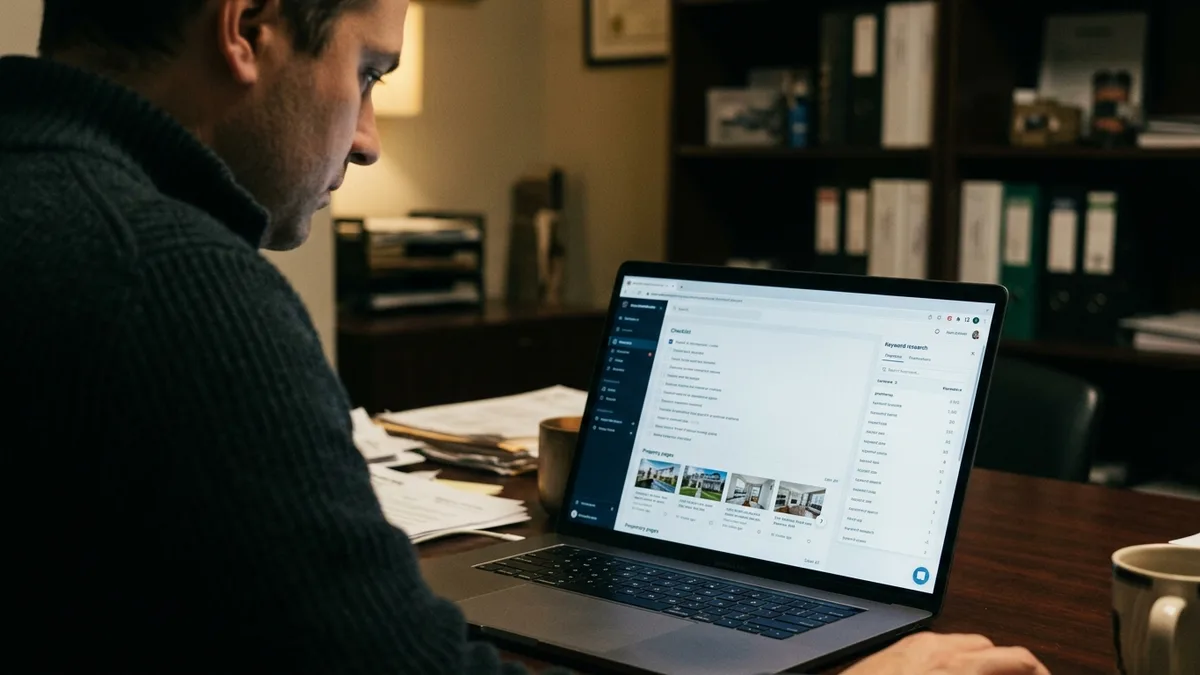
Checking this manually requires reviewing your robots.txt file, spot-checking noindex tags across your CMS, and running your sitemap through Google Analytics or Search Console to confirm indexing status. For a portfolio with dozens of pages, this is not a five-minute task, and most operators never learn there's a problem until months of missing traffic have already passed.
We run this exact check for every inkSTR customer project as part of the publishing process, confirming new content is indexable before it ever goes live rather than discovering the issue after a quarter of lost traffic.
7. Optimize for Long-Tail, Destination-Plus-Feature Keywords
Long-tail keyword targeting means writing content around specific phrase combinations travelers actually search, like "cozy cabin near the lake" or "pet-friendly condo by the beach," rather than competing for broad, high-volume terms your site has no realistic chance of ranking for. These destination-plus-feature combinations convert at a higher rate because the searcher already knows what they want.
Manual keyword research for this usually means hours in a spreadsheet, cross-referencing search volume tools like Ubersuggest or SEMRush against your property's actual amenities, then trying to guess which combinations are worth targeting. Most hosts either skip this step entirely or target the same three keywords every competitor in their market already owns.
inkSTR's Keyword Research tool surfaces destination-plus-feature combinations specific to your property type and market automatically, including competitor gap analysis that shows which terms your competitors rank for that you don't yet target.
8. Set Up and Optimize Your Google Business Profile
Google Business Profile is a free listing that controls how your rental business appears in local search and Google Maps, and it requires consistent business name, address, and phone information matched exactly across every online mention of your brand. Inconsistent listings, even something as small as "St." versus "Street," can quietly suppress your local visibility.
Setting this up correctly means claiming the profile, verifying it, uploading current photos, and then monitoring it for accuracy as your business grows, which many multi-property managers simply never revisit after the initial setup. Left unmanaged, an outdated profile actively works against your rankings instead of helping them.
We treat Google Business Profile as a complement to your content strategy, not a replacement for it. A profile with zero supporting website content behind it rarely ranks competitively; the two need to work together, which is part of why our local signals guide covers this pairing in more detail.
9. Speed Up Your Pages and Fix Mobile Usability
Page speed and mobile usability are ranking factors Google weighs directly, and vacation rental sites are especially vulnerable here because of large hero images and embedded booking calendars that load slowly on mobile connections. A slow property page loses visitors before they ever see your pricing or availability.
Diagnosing this manually means running every page through a speed testing tool, identifying which images or scripts are the bottleneck, then either compressing assets yourself or hiring a developer to fix it. Technical crawling tools like Screaming Frog can help identify these issues across a multi-page site, but interpreting the results still requires technical SEO knowledge most hosts don't have time to develop.
inkSTR doesn't fix your site's hosting or image compression directly, but our content is built lightweight and clean from generation, so the articles and pages we publish don't add to your speed problem, and our publishing pipeline flags obvious technical issues before content goes live.
10. Build Genuine Local Authority, Not Just Backlinks
Local authority means earning mentions and links from real local sources: tourism boards, area event calendars, and other local businesses, rather than chasing generic paid backlinks with no relevance to your market. Google's algorithms increasingly discount irrelevant links while rewarding contextually relevant ones.
Building this manually is slow, relationship-driven work: reaching out to local tourism sites, contributing to community event pages, and maintaining those relationships over time. Most operators either skip this entirely or buy low-quality backlinks that do more harm than good to their domain reputation. This is one area where competing checklists mention "backlinks" as a bullet point without any real process behind it.
Our backlink guide for STR operators breaks down what actually counts as a quality link in this space, and inkSTR's multi-project structure lets same-owner properties support each other's authority through a backlink exchange marketplace built specifically for the STR niche.
Ready to automate your content marketing?
inkSTR handles keyword research, content strategy, article writing, and publishing, all on autopilot.
What Is the 80/20 Rule in Airbnb Search Ranking?
The 80/20 pattern operators commonly reference in Airbnb search describes the idea that a small share of your listing's activity, primarily response rate, booking acceptance rate, and recent guest reviews, drives the majority of your marketplace visibility, while the remaining listing details have a smaller comparative impact. Airbnb's own documentation on what determines search placement confirms guest satisfaction and booking behavior carry significant weight. This is item 11 on our checklist because it's the highest-leverage marketplace action available to you.
The agitating part is that this is entirely outside your website's control. No amount of blog content or keyword optimization moves your Airbnb search position, because it's a closed system measuring your in-app behavior. Hosts who pour all their energy into marketplace optimization and none into their own site stay permanently dependent on Airbnb's algorithm and its commission structure, which combined with guest fees typically runs 17 to 19 percent of every booking.
This is exactly why we built inkSTR around direct booking growth instead of marketplace optimization. A single direct booking is typically worth $1,000 to $4,000 in revenue with none of that commission attached, and a ranking blog article can keep driving that traffic for 2 to 5 years after you publish it. Our booking page conversion guide covers what to do once that traffic actually arrives on your site.
12. Respond to Reviews on Both Google and Marketplace Platforms
Review responses influence both Airbnb's internal ranking and Google's local search trust signals, and skipping them costs you on both fronts. A pattern of unanswered reviews, especially negative ones, signals to future guests and to the algorithms that no one is actively managing the property.
Doing this consistently across a multi-property portfolio means checking every listing on every platform on a recurring schedule, which becomes unmanageable once you pass five or six properties without a dedicated system. Most property managers we talk to admit reviews are the first task that falls off when things get busy.
Review management isn't a core inkSTR feature, so we're direct about the limits here: we don't respond to reviews on your behalf. What our content strategy work does is surface recurring guest feedback themes from those reviews, which we've turned into blog posts addressing the exact questions or complaints guests keep raising, like a dedicated page on parking instructions after multiple reviews flagged confusion about where to park.
13. Get Listed Correctly on Google Vacation Rentals and PMS Integrations
Google Vacation Rentals is a distribution channel that surfaces your listing through a connected property management system or channel manager, giving you visibility beyond your own website and beyond Airbnb or VRBO alone. Getting this set up correctly requires accurate PMS integration and consistent listing data across every connected channel.
The setup process is technical and often requires coordinating between your PMS provider and whichever channel manager handles distribution, a process that can take days of back-and-forth if data doesn't sync cleanly the first time. Inconsistent data between your PMS and your website content confuses both guests and search engines.
inkSTR integrates with PMS platforms including Hospitable and OwnerRez, keeping your published content aligned with the same property data feeding your distribution channels, so your blog content and your booking data tell the same story.
14. Track Organic Sessions, Assisted Conversions, and Direct Bookings Separately
Attribution in vacation rental SEO means tracking organic sessions, bookings, and assisted conversions as distinct metrics, and industry guidance suggests a 90 to 180 day window before expecting meaningful movement in any of them. Most checklists mention "track your results" without explaining what to actually measure or how long to wait before judging performance.
Setting this up manually means connecting Google Search Console to your analytics platform, building a dashboard that separates organic search leads from marketplace bookings, and then checking it monthly with enough discipline to actually notice trends. Few solo operators or even small property management teams maintain this consistently.
We've watched this play out clearly in our own customer data. One Smoky Mountains cabin rental brand grew from 788 to 5,195 monthly Google Search clicks in 11 months on inkSTR, with monthly impressions climbing from 130,000 to 450,000 over the same period, and $309,775 in direct booking revenue attributed in the first fourteen months, all measured through Google Search Console and Google Analytics rather than third-party estimates.
15. Review and Refresh the Entire Checklist Quarterly
A quarterly review means revisiting every item on this checklist on a fixed schedule, not treating SEO as a one-time launch task. Search algorithms change, competitors publish new content, and your own property details shift with renovations or new amenities, so a checklist you ran once in January is already stale by summer.
Manually re-running fifteen checklist items across a growing portfolio every quarter is the exact workload that burns out solo hosts and small property management teams. It's also the single biggest reason most STR SEO efforts stall after a strong first month.
This is precisely the problem inkSTR's Content Calendar was built to solve. It schedules ongoing publishing automatically so your checklist keeps running in the background instead of depending on you remembering to revisit it every ninety days.
Why "Named Rules" for Airbnb Ranking Should Make You Skeptical
You may run across posts online referencing a specific numbered "rule" for Airbnb ranking, sometimes with two numbers stitched together like a formula. Airbnb has never published a rule by that name, and there's no verified source behind it. Treat any numbered "rule" you can't trace back to Airbnb's own documentation as unverified.
What Airbnb does confirm is that response rate, booking acceptance, and guest reviews carry meaningful weight in how listings appear in search results, which lines up with the 80/20 pattern covered in item 11 above. Focus your marketplace effort on those three confirmed behaviors instead of chasing an invented framework. Pair that work with the Google-facing items 1 through 10, since marketplace optimization alone will never build the direct booking channel your business needs long term.
Google SEO vs. Marketplace Optimization: A Side-by-Side Comparison
The table below separates every item on this checklist by which system it affects, so you can prioritize based on whether your immediate goal is growing your own direct-booking traffic or improving marketplace placement inside Airbnb or VRBO.
| Checklist Focus | Primary System Affected | Typical Manual Time Investment | Who Controls This |
|---|---|---|---|
| Title tags, meta descriptions, page copy | Google Search | 3-5 hours per page | You, on your own website |
| Structured data and technical crawlability | Google Search | Several hours, requires technical review | You or a developer |
| Response rate and booking acceptance | Airbnb/VRBO marketplace | Ongoing, daily behavior | You, inside the platform app |
| Guest review volume and responses | Both systems | Ongoing, per booking | You, across every platform |
| Local backlinks and Google Business Profile | Google Search | Ongoing relationship building | You, in the local market |
| Attribution tracking (GSC, GA4) | Both systems | Monthly review, ongoing setup | You, via analytics tools |
Notice how heavily the Google-facing column depends on sustained content work rather than one-time setup. That's the piece our guide to ranking your vacation rental website on Google goes deeper on, and it's also the piece inkSTR's content pipeline runs continuously rather than as a single project.
How Do You Prioritize This Checklist Across a Growing Portfolio?
Prioritizing this checklist across multiple properties means starting with items that affect indexing and crawlability first, since a page that isn't indexed can't rank no matter how well the copy is written. Only after confirming crawlability should you move to content depth, then technical polish, then ongoing authority building.
Common mistakes we see repeatedly: writing beautiful property descriptions on pages that are accidentally noindexed, and building backlinks to a destination pillar page that doesn't exist yet. Each of these wastes real effort on the wrong sequence.
- Confirm every property page is crawlable and indexed (item 6) before doing anything else.
- Fix title tags and meta descriptions across all pages (item 1).
- Write or refresh location-rich property copy (item 2).
- Build one destination pillar page per market you operate in (item 3).
- Layer in structured data and confirm it validates (item 5).
- Set up ongoing local authority and Google Business Profile work (items 8 and 10).
- Establish attribution tracking so you can measure what's actually working (item 14).
For a portfolio manager running 10 or more properties, this sequence manually across every listing is a multi-week project before you've even reached the ongoing maintenance phase. inkSTR's multi-project support runs an independent content pipeline for each property under one dashboard, so you're not repeating this sequence from scratch every time you add a listing.
What Keywords Should You Actually Target for Your Vacation Rental Website?
The keywords that convert best for vacation rental sites combine destination, property type, and a specific feature, following patterns like "pet-friendly condo by the beach" or "cabin near [destination] with hot tub," rather than broad single-word terms with heavy national competition. These long-tail combinations match how travelers actually search once they've narrowed down where they want to stay.
Broad terms like "vacation rental" or even "[city] cabin rental" are dominated by large property management companies and OTAs with far more domain authority than an independent host or boutique management company can realistically outrank in the near term. Competing there wastes content budget that would perform far better targeting specific, winnable combinations.
inkSTR's keyword research surfaces exactly these destination-plus-feature combinations for your specific market and property type, which is also the exact content approach behind our guide to vacation rental blog topics that drive bookings.
Frequently Asked Questions
How long does it take to see results from holiday rental SEO?
Most operators start seeing meaningful movement in organic sessions and rankings within 90 to 180 days of consistent publishing, based on industry benchmarks for content-driven SEO. Results compound after that window; a ranking blog article can continue driving organic traffic for 2 to 5 years, which is why consistency matters more than any single optimization.
How do I list a vacation rental property for SEO purposes?
Listing a property for SEO purposes means publishing a dedicated page on your own domain with 300 to 500 words of location-specific copy, accurate structured data, clear pricing and availability, and a prominent booking call to action, separate from your Airbnb or VRBO listing. Your own website page is what Google indexes and ranks; your marketplace listing follows a different set of rules entirely.
How does SEO help vacation rental managers drive direct bookings and growth?
SEO helps by building organic search visibility on your own website, reducing reliance on Airbnb and VRBO traffic and the 17 to 19 percent in combined fees those platforms charge per booking. A single direct booking is typically worth $1,000 to $4,000, and content that ranks well keeps generating that traffic for years without an ongoing ad spend.
What is the best vacation rental SEO tool?
The best tool depends on whether you need general-purpose SEO software or a platform built specifically for hospitality search intent. General SEO platforms like Moz or SEMRush handle broad keyword research well but don't understand vacation rental terminology or traveler intent out of the box. inkSTR was built specifically for short-term rental operators, combining keyword research, content generation, and automated publishing in one pipeline designed around this exact niche.
Do I need a blog if I already have a direct booking website?
Yes. A direct booking website with property pages alone typically targets only narrow, high-intent keywords, while a blog lets you rank for the broader destination and planning searches that bring new visitors into your site earlier in their decision process. Without that top-of-funnel content, most of your organic traffic potential goes untapped.
How often should I publish new content for my vacation rental site?
Consistency matters more than volume; most operators see stronger results from a steady, sustained publishing cadence over many months than from a burst of content followed by silence. inkSTR's Content Calendar schedules publishing automatically so this cadence continues even during your busiest booking seasons.
Can AI-generated content actually rank on Google and get cited in AI search results?
Yes, when it's built around real keyword research, real location detail, and proper technical structure rather than generic templated text. As of September 2026, articles published across inkSTR customer sites have secured more than 1,200 verified AI-search citations, alongside over 2,790,000 Google Search impressions in the trailing 90 days, showing this content performs in both traditional and AI-driven search.
Where Does This Leave Your Short-Term Rental SEO Checklist in 2026?
A working short-term rental SEO checklist separates Google-facing work from marketplace optimization, sequences technical fixes before content polish, and gets reviewed every quarter instead of once at launch. The fifteen items above cover title tags through structured data, destination pillar pages through Google Business Profile, and marketplace behavior through attribution tracking, giving you a system rather than a one-time task list.
The market keeps growing, with the global vacation rental sector projected at $84.02 billion in 2026, which means more competition for the same search terms every year that passes. Running this checklist manually across a growing portfolio is a real time cost: 3 to 5 hours per page just for the content work, before technical items and ongoing maintenance.
Running this checklist consistently is what separates the operators who build lasting organic traffic from the ones who write one good property page and move on.

If running through fifteen checklist items across every property in your portfolio sounds like a job you don't have hours for this quarter, that's exactly what inkSTR automates. Our content calendar keeps publishing on schedule, our keyword research surfaces the destination-plus-feature terms your market actually searches, and our AI content writer builds pages around your real property data instead of generic templates. Get started with inkSTR and see your first content plan today.
Content powered by inkSTR.co
Enjoyed this article? Share it:
Get more of inkSTR in Google Search
Add inkstr.co as a preferred source and our articles show up more in Top Stories, AI Overviews, and AI Mode — with a “Preferred” badge.
Get more guides like this
New SEO and AI-search guides, straight to your inbox. No spam, unsubscribe anytime.