AI Blogging for Vacation Rentals Without the Robotic Tone
AI blogging uses software to research keywords, draft articles, and publish them on a schedule, so your vacation rental site earns search traffic without you writing every post. Done well, it produces posts grounded in real property details that rank on Google and turn readers into direct bookings.
Key Takeaways
- AI blogging combines keyword research, article drafting, scheduling, and publishing; the setups that work automate all four stages, not only the drafting.
- Robotic tone comes from generic prompts and missing property detail. Grounding every post in real facts about your rental and market removes most of it.
- Writing one quality post by hand takes 3-5 hours of research and writing, which is why most vacation rental blogs stall after a handful of posts.
- A single direct vacation rental booking is typically worth $1,000 to $4,000 in revenue, while Airbnb host and guest fees combined take 17-19% of every booking.
- A ranking blog article can drive organic search traffic for 2-5 years, so consistent publishing compounds over time.
- inkSTR automates keyword research, long-form drafting, scheduling, and publishing to WordPress or Wix, so you review posts instead of writing them.
If you run a vacation rental, the blog is probably the project you meant to start months ago. The direct booking site is live, the photos are good, and the Airbnb and VRBO listings keep the calendar busy. But the blog sits empty, because one decent post eats an evening you do not have.
The stakes keep rising in 2026. According to Market Intelo, the global vacation rental market was valued at USD 115.0 billion in 2026, and guests increasingly ask search engines and AI assistants where to stay. AI blogging is how a small operator publishes enough useful content to show up in those answers.
At inkSTR, we have worked with operators running a single cabin and with managers running large portfolios, and the failure pattern repeats. Either nothing gets published, or the AI output reads like a brochure for nowhere in particular. This guide shows how to avoid both outcomes.
What Is AI Blogging and How Does It Work for Vacation Rentals?
AI blogging for vacation rentals is a workflow where software handles keyword research, article drafting, scheduling, and publishing for your direct booking website. You approve the strategy and the output; the software does the repetitive work. The result is a steady stream of search-optimized posts built around what guests type into Google and AI assistants.
Without automation, the workflow looks painfully familiar. You spend an evening guessing at keywords, several hours drafting, another hour fighting the formatting in your website editor, and then nothing for six weeks because the busy season arrived. Freelancers solve the time problem but bring a per-post bill and a learning curve on your property.
What are the stages of an AI blogging workflow?
- Keyword research: finding the searches your guests use, such as 'pet-friendly cabin with a hot tub near a ski lift'.
- Drafting: turning each keyword into a full article with an answer-first structure.
- Scheduling: spacing posts across weeks so the site publishes steadily.
- Publishing and measurement: pushing posts live and watching impressions and clicks in Google Search Console.
We built inkSTR to run all four stages in one place. The Keyword Research feature finds the terms your target guests search, the AI Content Writer drafts the articles, and the How inkSTR Works page walks through the full path from keyword to published post.
Can AI-Written Blog Posts Rank on Google and Get Cited in AI Search?
Yes, AI-written posts can rank on Google and earn citations in AI search when they answer a specific question first, contain verifiable property and market detail, and sit inside a connected set of related articles. Thin, generic output rarely ranks, whether a person or a model wrote it.
Most operators test this by publishing three or four generic posts, watching nothing happen for a quarter, and deciding that blogging does not work. The conclusion is understandable and wrong. A post titled 'Things to Do This Summer' competes with every tourism board and listing site on earth, and you will not win that fight.
The AI Content Writer in inkSTR takes the opposite approach. It generates 2,500 to 3,500 word articles from keyword research, grounds them in real property details, and structures them answer-first so AI engines can quote them. The customer data backs the approach: Hemlock Hills, a Smoky Mountains cabin rental brand, grew monthly Google Search clicks from 788 to 5,195 in 11 months. The Peak Properties went from 26 to 1,924 monthly Google search visits in four months after publishing 114 articles across five markets.
As of October 2026, we have secured more than 1,400 verified AI-search citations for content on inkSTR customer sites. That tells us structure and specificity matter as much as keywords. A ranking article can also keep driving organic traffic for 2-5 years, so each post keeps working long after you publish it.
For the mechanics, read our guide to ranking in AI search as an STR operator. For background on how Google's newest search experience works, see the Google AI Mode update.

Why Do AI-Written Vacation Rental Posts Sound Robotic, and How Do You Fix It?
Robotic AI writing is text that could describe any property in any town: vague adjectives, uniform sentence length, and no detail a guest or host could verify. It happens when a model works from a generic prompt instead of real facts about your cabin, your street, and your guests.
Readers notice within a sentence or two. A post that says 'our cozy retreat offers the perfect getaway' tells them nothing, so they go back to the listing site, and the direct booking never happens. This is the single most common reason AI-written vacation rental posts fail, and it has nothing to do with the technology being unusable.
Which four fixes remove the robotic tone?
- Feed the model real facts. Bed configuration, hot tub details, distance to the trailhead or lift, check-in process, and seasonal quirks all belong in the input.
- Open every post with the answer. Readers and AI engines both reward a direct first paragraph.
- Break the rhythm. If every sentence runs 15 to 20 words, rewrite a few as fragments or long, winding observations.
- Add one detail only you know. The parking spot guests always miss, or the trail that stays muddy until May.
That is why the inkSTR AI Content Writer pulls property details into each draft instead of starting from a blank prompt. The Hemlock Hills pipeline, for example, was built on articles grounded in real property data. If protecting your voice is the main worry, our guide to article automation without losing your brand voice goes deeper.
What Should an AI Blogging Tool for Vacation Rentals Be Able to Do?
A good AI blogging tool for vacation rentals handles keyword research, long-form drafting, scheduling, and publishing in one place, and understands short-term rental language like direct booking intent, pet-friendly stays, and seasonal demand. A general-purpose writing assistant covers drafting only, which leaves the rest on your plate.
Many hosts start with a general chatbot and hit a wall by the third post. You still choose the keywords, paste results into your website, format headings, add images, and remember to do it all again next week. Drafting was never the only slow part.
| Approach | Keyword research | Drafting | Scheduling and publishing | Cost |
|---|---|---|---|---|
| Writing by hand | You do it | You do it | You do it | Your own time |
| Freelance travel writer | Depends on the writer | Included | Usually your job | $300-$700 per quality post |
| General-purpose AI chatbot | Only if you prompt for it | Yes, from generic input | You do it | Varies by plan |
| inkSTR | Built in | Yes, with STR context | Built in, automatic | See the pricing page |
We designed inkSTR specifically for short-term rentals, which is the gap general-purpose tools leave open. It handles hospitality terminology, traveler search intent, and market types from beach towns to mountain retreats and urban apartments, and it connects to Wix and WordPress for publishing.
Can you try an AI blogging tool for free?
With inkSTR you can start a free trial and see a content plan built for your properties before you commit. Current plan details sit on the pricing page.
What Should You Blog About to Attract Guests to Your Rental Website?
The posts that attract guests target specific, late-funnel searches: a type of stay, a place, and a need, such as a lake house that sleeps a big family with a dock. Generic roundups rarely win direct bookings because listing sites and tourism boards already own those results.
The painful alternative is the blank page every week. You wonder what to write, copy a competitor's topic list, and end up with a post that ranks for nothing a booking-ready guest would type. Meanwhile larger property management companies publish dozens of targeted pages and collect the searches you wanted.
Which topic types tend to earn bookings?
- Property-type and amenity pages: pet-friendly, hot tub, large groups, remote work stays.
- Local planning content with a booking angle: see our breakdown of local area guides that sell.
- Seasonal trip logistics: when to book, what changes between shoulder season and peak.
- Owner-facing content if you manage homes for others and want management leads.
Our vacation rental blog topics guide covers more ideas. The point is that you should not pick topics by gut feel. inkSTR's content strategy wizard maps pillar and cluster articles around direct-booking intent, and Keyword Research feeds it real guest searches. The Peak Properties used this approach, writing each article around buying-intent searches with real property details. If direct bookings are the goal, our direct bookings page explains how the pieces connect.

How Much Does AI Blogging Cost Compared With Hiring a Writer?
AI blogging with inkSTR costs $99 per month, while a freelance travel writer charges $300-$700 for one quality post, and writing one yourself takes 3-5 hours. A single freelancer invoice therefore equals roughly three to seven months of the inkSTR subscription.
The cost of not publishing is harder to see. Imagine a $2,000 stay booked through Airbnb. At combined host and guest fees of 17-19%, roughly $340 to $380 of that goes to the platform. Multiply that across a season and the platform fee becomes your largest marketing expense, with no asset to show for it.
Content works differently. A single direct vacation rental booking is typically worth $1,000 to $4,000 in revenue, and the guest who books direct is also yours to email next year. One extra direct booking can cover the subscription many times over. The pricing page lists current plans if you want to run your own numbers.
We priced inkSTR this way on purpose. It generates, schedules, and publishes articles automatically on a set schedule, so the cost stays flat while the library of ranking posts grows. If you manage a larger portfolio, the property management page shows how the same pipeline scales across listings.
Ready to automate your content marketing?
inkSTR handles keyword research, content strategy, article writing, and publishing, all on autopilot.
How Do You Schedule and Publish AI Blog Posts Without Doing It Manually?
Scheduling AI blog posts means loading approved articles into a content calendar that publishes them to your website on set dates, so consistency no longer depends on your free time. With inkSTR, posts go straight to WordPress or Wix on schedule, with no copying and pasting.
Manual publishing is where good intentions die. You finish a draft, then open your website editor, reformat headings, upload images, write the meta description, fix the broken link, and set the date. That is easily another hour per post, and one missed week turns into a missed month.
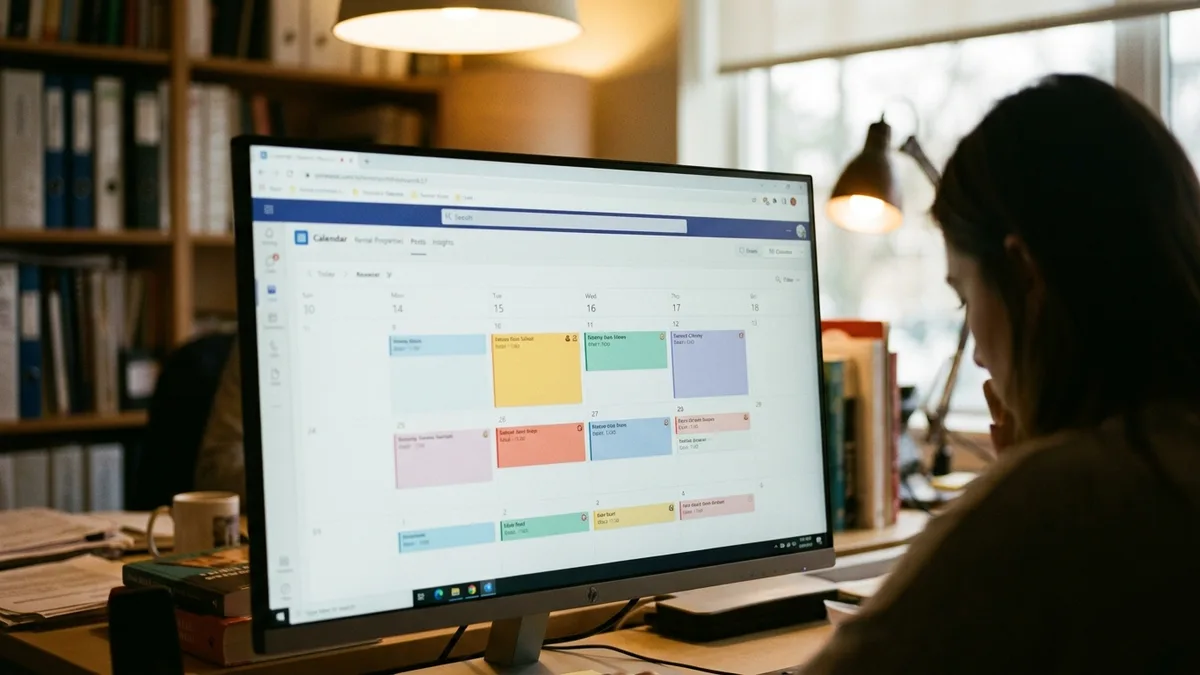
The inkSTR Content Calendar is a drag-and-drop view where you move articles between dates, and Auto-Publishing pushes them live to WordPress, Wix, or a custom site. Pre-publish validation and quality scoring run before anything goes live, and the Google Search Console integration shows how each post performs afterward.
Cadence matters more than bursts. Most sites see meaningful traffic gains within three to six months of steady publishing, so a calendar that runs itself is worth more than a heroic month followed by silence.
What Results Can You Expect From AI Blogging, and How Fast?
Most vacation rental sites see meaningful search traffic gains within three to six months of consistent publishing, though speed depends on competition, cadence, and content quality. Results from inkSTR customers show the range, and none of them is a guarantee for your market.
| Customer | Market type | Timeframe | Measured result |
|---|---|---|---|
| Hemlock Hills | Cabin rental brand, Smoky Mountains | 11 months | Monthly Google Search clicks grew from 788 to 5,195; $309,775 in direct booking revenue attributed over the first 14 months |
| The Peak Properties | Five-market mountain rental brand | 4 months | Monthly Google search visits grew from 26 to 1,924 after 114 articles; $2,500+ in commission-free direct bookings |
| MyTripify | STR management company, Charlotte and Lake Norman | First month and 3 months | 4 property-owner leads from AI search in month one; Google impressions at 4.6x the year-ago level |
All three were measured in Google Search Console, Google Analytics, or Wix Analytics rather than estimated by third-party tools. That matters, because estimates from outside tools often disagree with what your own analytics show.
The painful stretch is the early weeks, when you publish into silence. Impressions usually move before clicks, and clicks move before bookings. Connect Google Analytics and Search Console on day one so you can see the early signals instead of guessing. inkSTR's Search Console integration puts that data beside your content calendar, which keeps you from abandoning the strategy in month two.

How Does AI Blogging Differ for a Solo Host and a Property Manager?
A solo host with one to five properties needs a small set of high-intent posts and a steady cadence, while a manager with ten or more listings needs separate content pipelines per property or market, plus owner-acquisition content. Both depend on automation because neither has a writing team.
What does it look like for a solo host?
Imagine a host with one lake house and a direct booking site. Her time goes to guest messages and turnovers, and her blog has two posts from last spring. Automation changes the math: a short list of buying-intent keywords, a weekly drip of posts, and a ten-minute review each time. She does not need to become an SEO expert.
What does it look like for a portfolio manager?
Now imagine a manager with fifteen homes across three towns. Updating content for each property by hand consumes his week, and the company site ranks poorly for local searches. inkSTR's multi-project support gives each property or brand its own independent pipeline in one dashboard. MyTripify, a management company with a 50+ property portfolio, used owner-facing content to get four property-owner leads from AI search in its first month.
The shared rule is to match content to the guest or owner you want next. Our article on why generic travel content kills conversions explains what happens when you skip that step.
How Do You Set Up an AI Blogging Workflow This Week?
You can set up an AI blogging workflow in a few working sessions: choose your markets and guests, connect your site, review a first batch of drafts, and schedule them. After that, your job shrinks to a short weekly review of what is about to publish.
- Define your markets, property types, and the guests you want more of.
- Run keyword research for buying-intent searches and pick a starting set.
- Add property facts and voice notes so drafts do not sound generic.
- Review the first drafts: check facts, rewrite the opening line if needed, and add one local detail.
- Schedule posts in the content calendar and connect auto-publishing.
- Check Search Console monthly and write more around posts that earn impressions.
What mistakes should you avoid when you start?
- Publishing without review. A five-minute fact check protects your credibility.
- Chasing broad keywords. A small site rarely beats established travel brands for generic terms.
- Ignoring the snippet. Preview titles and descriptions in the Google SERP Simulator before they go live.
- Quitting early. Our guide on how to rank your vacation rental website on Google explains why patience pays.
If your blog already gets visitors who do not book, read why your blog content isn't converting visitors into guests. inkSTR's workflow combines the steps above, and the How InkSTR Works page shows the screens for each one.
What Should You Do Next With AI Blogging in 2026?
The fastest route is to automate the stages that stall you, usually keyword research and publishing, and keep your own judgment on facts and voice. AI blogging works when posts carry real property detail, answer questions first, and publish on a steady schedule. That combination is what turns a quiet blog into a direct booking channel.
Search is moving toward AI-generated answers in 2026, and the operators who already have specific, well-structured content are the ones those answers can quote. If keeping up with keyword research and blog publishing across your properties feels impossible right now, inkSTR was built to automate exactly this. Start a free trial and see your first content plan today.

Frequently Asked Questions
Can AI-written blog posts rank on Google?
Yes, when they are specific, accurate, and structured around a real search question. In our experience, what separates ranking posts from invisible ones is usefulness and property detail, not the tool that produced the first draft. Customers such as Hemlock Hills grew monthly Google Search clicks from 788 to 5,195 in 11 months with a steady AI-assisted pipeline.
What are the best AI blogging tools for vacation rentals?
Look for a tool that covers keyword research, drafting, scheduling, and publishing, and that understands short-term rental search intent. General-purpose writing assistants cover drafting only. We built inkSTR for exactly this niche, with a content writer, a content calendar, and publishing to WordPress or Wix.
Can I try an AI blog writing tool for free?
Yes. inkSTR offers a free trial you can start here, so you can see a content plan for your properties before paying. Plans after the trial start at $99 per month.
How can a vacation rental attract guests with blog content?
Publish posts that match late-funnel searches, such as a property type plus a place plus a need, and link each post to your direct booking page. Generic destination roundups rarely convert. Our guide to vacation rental blog topics that drive bookings lists formats to start with.
How much does AI blogging cost compared to a freelance writer?
inkSTR costs $99 per month, while freelance travel writers charge $300-$700 per quality post. Writing manually costs you 3-5 hours per post. The subscription also covers scheduling and publishing, which freelancers usually leave to you.
How often should I publish vacation rental blog posts?
Choose a cadence you can sustain for several months, because consistency drives rankings more than occasional bursts. Most sites see meaningful gains within three to six months of steady publishing. A content calendar that publishes automatically removes the need to rely on willpower.
Do I need a blog if I already have a direct booking website?
Yes, if you want guests to find that website without paying platform fees. A booking page alone has little to rank for, while blog posts capture the searches guests make before they choose a property. Read our guide on ranking on Google for STRs for the details.
Content powered by inkSTR.co
Enjoyed this article? Share it:
Get more of inkSTR in Google Search
Add inkstr.co as a preferred source and our articles show up more in Top Stories, AI Overviews, and AI Mode — with a “Preferred” badge.
Get more guides like this
New SEO and AI-search guides, straight to your inbox. No spam, unsubscribe anytime.