How to Optimize a Vacation Rental Website for ChatGPT
To optimize a vacation rental website for ChatGPT, let OpenAI's crawlers reach your pages. Put every property fact in plain HTML. Add VacationRental and FAQ schema, and keep details identical across your site, Google Business Profile, and OTA listings. At inkSTR, we build content pipelines around exactly this pattern.
Key Takeaways
- Crawler access comes first: OAI-SearchBot must be able to reach your pages, and Bing as well as Google should index them.
- Property facts such as bed types, pet rules, parking, fees, and check-in method belong in plain page text, not only inside a booking widget.
- VacationRental and FAQPage JSON-LD should mirror visible page text exactly; schema clarifies good pages but does not rescue thin ones.
- Identical facts across your website, Google Business Profile, Airbnb, and VRBO reduce conflicting or stale AI answers.
- No listing claim guarantees recommendations, so measure with chatgpt.com referrals in your analytics and a monthly prompt test.
- inkSTR generates answer-first, citation-ready articles and publishes them to Wix or WordPress on a schedule, so your visibility keeps compounding without you writing every post.
Guests now ask assistants questions like "pet-friendly cabin near a lake with a hot tub" instead of scrolling a grid of OTA thumbnails. In 2026, a vacation rental that an AI system cannot read or quote is invisible in that conversation, however good the property is. Corroboration matters too.
This guide walks through seven steps in the order we would run them: access, facts, schema, writing, consistency, channel strategy, and measurement. Each step names the manual pain and the point where automation removes it.
Most advice on this topic stays generic. We focus on what you can verify yourself in an afternoon: your robots.txt file and your page source. Your analytics referrers and a short list of real guest questions matter too.
What Does It Take to Optimize a Vacation Rental Website for ChatGPT?
Optimizing a vacation rental website for ChatGPT means making your property facts crawlable, structured, consistent, and quotable so an AI assistant can retrieve and cite them when a guest asks for a stay. This discipline is called generative engine optimization (GEO), and it builds on ordinary SEO rather than replacing it.
Assistants such as ChatGPT and Perplexity find rental sites the same way search engines do: by crawling pages and reading search indexes. Then they summarize what they retrieved. Bing's index matters for ChatGPT search, which is why this explanation of how Bing ranking signals connect to ChatGPT search is worth a read. Google's AI Mode update works from Google's own index. Answer engine optimization (AEO) is the same craft aimed at direct answers.
The painful alternative is waiting. Every booking that routes through an OTA carries combined host and guest fees of 17-19%, while a single direct booking is typically worth $1,000 to $4,000 in revenue. Hosts who ignore AI discovery keep paying that toll on guests an assistant could have sent straight to their site.
We built inkSTR's LLM citation optimization into every draft for this reason. The AI Content Writer produces answer-first, entity-rich articles, so the structure assistants prefer is there from the first paragraph.

Step 1: How Do You Let ChatGPT Crawl Your Vacation Rental Site?
Letting ChatGPT crawl your site means making sure robots.txt and firewall rules do not block OpenAI's search crawler, OAI-SearchBot. Page rendering must not block it either, and your pages need to be indexed in Bing as well as Google. A page the crawler cannot reach cannot be cited, no matter how well it is written.
OpenAI publishes separate crawlers. As we understand its documentation, OAI-SearchBot relates to appearing in search results, while GPTBot relates to model training. Blocking GPTBot is a policy choice you can make independently, but confirm the current wording in OpenAI's crawler documentation before you edit anything.
- Open yourdomain.com/robots.txt and confirm no blanket Disallow rule catches OAI-SearchBot.
- Check server logs for AI crawler user agents over the previous 30 days.
- Verify the site in Google Search Console and Bing Webmaster Tools, then submit your sitemap.
- Consider enabling IndexNow so Bing hears about new pages quickly.
Pro tip: security plugins and CDN bot protection often block unfamiliar crawlers silently. Test with a real fetch rather than assuming. The whole audit usually fits in an afternoon.
Doing this by hand on every site you run, then re-checking after each plugin update, is tedious. inkSTR's Auto-Publishing sends articles straight to Wix or WordPress, and the Search Console integration shows whether new pages are being picked up.
Step 2: How Do You Put Property Facts Where AI Can Read Them?
Readable property facts are details such as bedroom layout, guest capacity, pet rules, parking, fees, and check-in method. Write them as plain text in your page HTML. Do not hide them inside a booking widget, an image, or a script-rendered tab.
The check takes two minutes. Right-click a property page and view the source. Then search for a bed type or your pet policy. If it is missing, an assistant likely cannot see it either. A crawler such as Screaming Frog can run the same test across every page at once.
| Fact | Where to write it | What to include |
|---|---|---|
| Sleeping setup | Opening paragraph | Each bedroom named with its bed type |
| Pet and house rules | Dedicated text block | Pet policy, fees, quiet hours, smoking rules |
| Parking and access | Location section | Spaces, steps, accessibility notes |
| Distances | Location section | Named trailhead, marina, ski lift, or downtown |
| Check-in details | FAQ block | Method, time window, early arrival policy |
Rewriting every property page by hand, then keeping each one current, is where most small portfolios stall. We built inkSTR's integrations with Hospitable and OwnerRez so reviews, photos, and guest data feed the drafts. Real property detail lands in text instead of staying locked in a widget.
Step 3: What Schema Markup Helps a Vacation Rental Get Cited by AI?
Schema markup is JSON-LD code that labels page content for machines. For vacation rentals, the most useful types are schema.org VacationRental for the property and FAQPage for question blocks. An Organization or LodgingBusiness entity covers your brand. It clarifies facts; it does not create authority.
The VacationRental structured-data documentation from Google lists the properties it expects, so start there. Validate your output before publishing. One rule matters more than any other: every marked-up value must match visible text on the page. A schema block that claims a hot tub the copy never mentions invites trouble.
Our opinion, from watching many rental sites: thin pages with flawless markup stay invisible. Schema multiplies content that already answers questions, so write the page first and mark it up second.
The manual route means hand-coding JSON-LD per property and editing it every time a rule, fee, or amenity changes. That is a developer invoice or a lost weekend, and it breaks quietly.
inkSTR articles carry a clean heading hierarchy and an FAQ block wrapped for FAQPage extraction, and the platform injects the JSON-LD automatically. You can see the broader toolset on the features page.
Step 4: How Do You Write Descriptions and FAQs That ChatGPT Can Quote?
Quotable property copy opens each section with a direct answer. It names the property type and place in the first sentence. It keeps one fact per sentence, so an assistant can lift a passage without rewriting it.
Compare two openings. "Escape to your dream getaway" gives an assistant nothing to quote. "A lake house with a private dock, a fenced yard that allows dogs, and a short drive to the marina" gives it three retrievable facts. Put an entity-clear H1 and first paragraph on every property and destination page, then rewrite section openings so the answer comes before the narrative.
Phrase headings and FAQ questions the way a guest would speak them, and keep each answer to two to four sentences. Local guides that name a specific trailhead and admit what is overhyped earn citations that generic "top things to do" lists never will.
Writing this well costs a freelance travel writer $300-$700 per post, or 3-5 hours of your own research and drafting. Most operators abandon the routine within weeks.
That is the gap we designed inkSTR to close. MyTripify is a Charlotte and Lake Norman management company. It started on inkSTR at the end of April 2026. In its first month, it had four property-owner leads arrive from AI search, measured in Search Console and its own lead records. You can read more outcomes in our case studies.

Step 5: How Do You Keep Facts Consistent Across Your Website, Google Business Profile, and OTAs?
Entity consistency means your business name, property names, address, capacity, amenities, rules, and rates read identically everywhere. That includes your website, Google Business Profile, Airbnb, VRBO, and directory listings. An AI system then sees one corroborated entity instead of conflicting claims.
Conflicts are common. A listing says four guests, the website says six, and the profile lists an old phone number. An assistant that hits two answers either hedges or picks the wrong one.
Rates deserve special care. How you price your vacation rental belongs in your pricing tool, but on the website, avoid hard-coding a nightly number that goes stale. Say that rates vary by season and point to the live booking calendar, so AI answers do not quote last year's price.
Some operators ask about claiming a business listing inside ChatGPT. Treat any such claim as a data-accuracy step, not a ranking lever. It does not guarantee recommendations or bookings, and the process changes, so follow OpenAI's current instructions.
Keeping 15 or more properties aligned across channels can eat a whole day each month. inkSTR gives each property or brand its own project, with its own keyword set and writing style, so you can maintain consistent content from one dashboard. Management companies can see how this fits on our property management page.
Ready to automate your content marketing?
inkSTR handles keyword research, content strategy, article writing, and publishing, all on autopilot.
Step 6: How Does Optimizing for ChatGPT Differ from Google AI Overviews and Airbnb AI Search?
ChatGPT and Google AI Overviews each retrieve from different data. So does Airbnb's in-app search. ChatGPT leans on crawled pages and search indexes, AI Overviews on Google's index, and Airbnb search on your OTA listing data. Your direct website feeds only the first two.
Keep your OTA listings sharp, but do not mistake them for a strategy. Only the website builds an owned audience, and it is the only one of the three you control. Our breakdown of a vacation rental website versus an Airbnb listing covers the trade-offs.
Splitting effort across three surfaces by hand means three writing styles and three audits. inkSTR writes one draft structured for both Google and LLM citation, and its direct bookings approach routes each article to your booking page through managed internal links.
Step 7: How Do You Measure ChatGPT Referral Traffic and Citations?
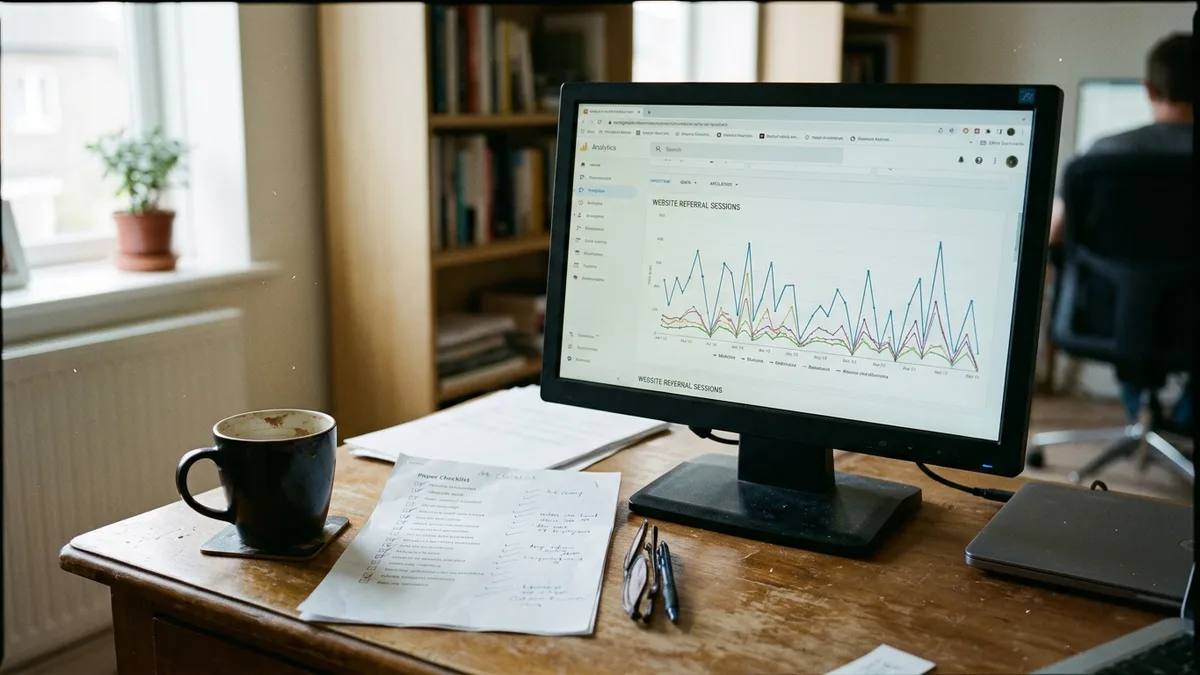
Measuring ChatGPT visibility means tracking two things separately: referral sessions that arrive from the assistant in your analytics, and a repeatable prompt test that records whether your properties appear in answers.
In Google Analytics, look for traffic whose referral source shows chatgpt.com and compare its booking-page visits against other channels. Volumes are usually small at first, so watch direction rather than daily swings.
For the prompt test, write a list of 15 to 25 real guest questions for your market, run them in at least two assistants, and record whether you appear and what the assistant says. Repeat monthly. Answers vary between runs, so treat results as a trend, not a ranking.
We have not run a controlled before-and-after experiment on ChatGPT citations, so this method rests on practice, not proof. Crawler access, visible facts, and consistent data are well-grounded. Proposals such as an llms.txt file are emerging conventions with limited evidence, so do them after the basics.
Without measurement, you pay for content and never learn what worked. inkSTR's Search Console integration tracks keyword movement and flags opportunities. Across inkSTR customer sites, we have secured more than 1,700 verified AI-search citations for customer content as of November 2026, and tracking is how we know which structures earn them.
What Should You Do in the First 30 Days, and Which Mistakes Cost You Citations?
A 30-day AI visibility plan moves through four blocks: access, facts, structure, and measurement. Follow the steps in order, because fixing schema before crawler access wastes the effort.
- Week 1: Audit robots.txt, firewall rules, and Bing and Google indexing so OAI-SearchBot can reach every property page.
- Week 1: View page source on each property page and confirm beds, amenities, pet rules, and house rules appear as text.
- Week 2: Add VacationRental and FAQPage JSON-LD that matches visible copy exactly.
- Week 2: Rewrite each section opening to lead with a direct answer and name the property type and place.
- Week 3: Align names, capacity, amenities, and rates across your website, Google Business Profile, Airbnb, and VRBO.
- Week 4: Write your 15 to 25 guest questions and record baseline answers in two assistants.
- Week 4: Set up a chatgpt.com referral view in analytics and schedule a monthly re-test.
The mistakes that keep rentals out of recommendations are consistent. Accidental crawler blocks and facts hidden in widgets top the list. Markup that states details the page never mentions comes next, followed by stale rates left live and one good post followed by silence.
That last one is the most common. Consistent publishing is where our Content Calendar helps, scheduling a month of articles at once, while Keyword Research picks the guest searches worth targeting. Our guide to keyword research for vacation rental sites shows the manual version, and how inkSTR works shows the automated one.
Frequently Asked Questions
Yes, when your pages are crawlable, state property facts in plain text, and are corroborated by consistent listings elsewhere. No setting guarantees a recommendation, and answers vary between runs. Test with real guest questions and track chatgpt.com referrals in your analytics.
Ranking comes from publishing helpful pages that match what travelers search and earning indexing and internal links. Keep the technical basics clean as well. It takes months, not weeks. Our guide on how to rank your vacation rental website on Google covers the sequence, and inkSTR automates the publishing.
How can I audit my website for GEO best practices?
Check crawler access first, then view page source for property facts, validate schema against visible text, compare facts across your listings, and run a prompt test in two assistants. Our SEO audit examples for vacation rental websites show what findings look like in practice.
What is generative engine optimization for vacation rentals?
Generative engine optimization (GEO) is the practice of structuring your website so AI assistants can retrieve and understand your properties. It also lets them cite those properties. Answer engine optimization (AEO) is closely related and focuses on direct, quotable answers. Both depend on clear facts and answer-first writing. Consistent data across the web matters as well.
What are the best website builders for vacation rental direct bookings?
Choose a builder that lets you edit page text and add structured data. It should also connect your booking engine or PMS. You do not need to clone Airbnb to create a direct booking site; you need crawlable pages and a booking path. inkSTR publishes directly to Wix and WordPress.
No. A claimed listing may help keep your basic business data accurate, but it does not guarantee recommendations or bookings. Follow OpenAI's current instructions and still invest in your website content, which is the source assistants quote.
What company focuses on vacation rental SEO in 2026?
inkSTR focuses exclusively on short-term rental SEO and content. It handles keyword research and drafts citation-ready articles. Then it schedules them and publishes to your site automatically. The AI is tuned to vacation rental terminology and traveler search intent.
How does vacation rental SEO drive more direct bookings?
SEO places your own pages in front of travelers before they reach an OTA, where combined fees run 17-19% of every booking. A ranking article can drive organic traffic for 2 to 5 years, and each direct booking is typically worth $1,000 to $4,000.
Conclusion
To optimize a vacation rental website for ChatGPT, start where the failure is invisible: let OAI-SearchBot in, confirm your facts sit in plain HTML, mirror them in schema, and keep every listing consistent. Then measure monthly with referral data and a prompt test.
Begin this week with the crawler audit and the page-source check. Both are free and both reveal problems most hosts do not know they have. In 2026 and beyond, the sites that keep publishing accurate, answer-first content will be the ones assistants quote.
If you would rather not spend your week on keyword research and drafting, inkSTR handles both. It writes citation-ready articles in your own voice, schedules them in the Content Calendar, and publishes to Wix or WordPress automatically. Start Free Trial and generate your first keyword-targeted article.
Content powered by inkSTR.co
Enjoyed this article? Share it:
Get more of inkSTR in Google Search
Add inkstr.co as a preferred source and our articles show up more in Top Stories, AI Overviews, and AI Mode, with a “Preferred” badge.
Get more guides like this
New SEO and AI-search guides, straight to your inbox. No spam, unsubscribe anytime.